










Museo Regional de Guadalupe

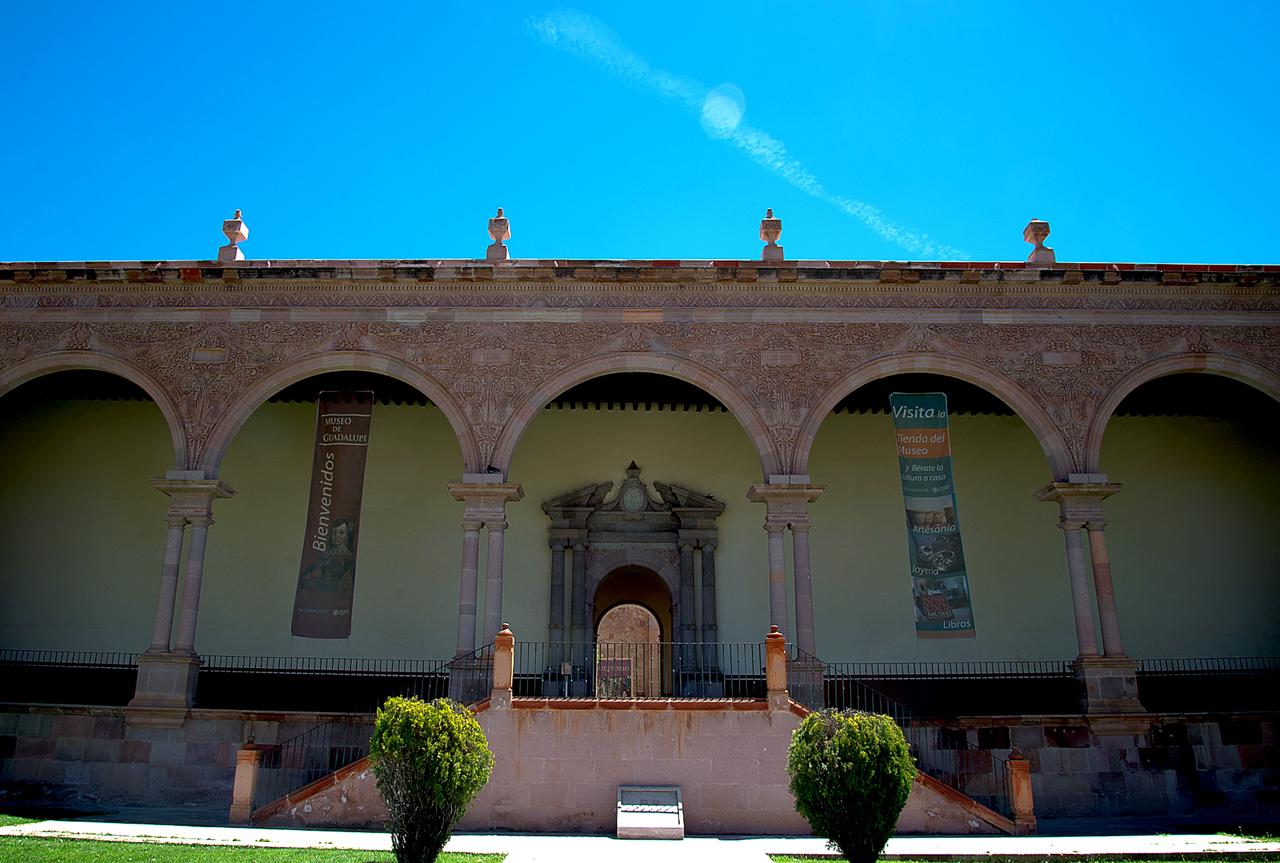
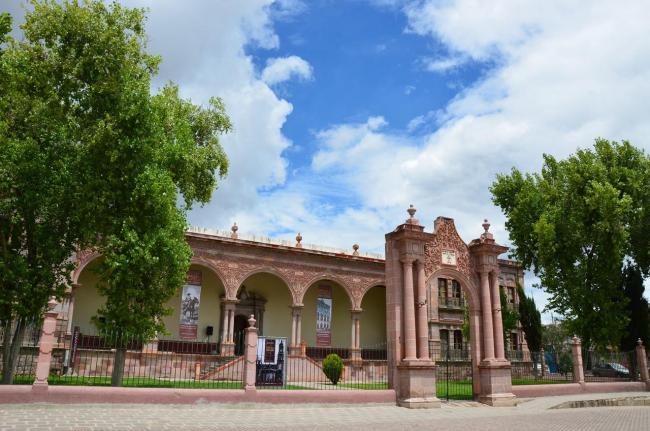
One of the most outstanding colonial buildings in Zacatecas, it contains an excellent collection of the greatest painters of the period. Complemented by a fine collection of academic and popular sculptures of the religious art of New Spain.
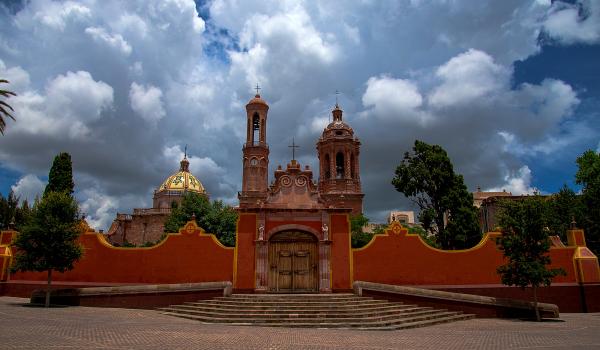
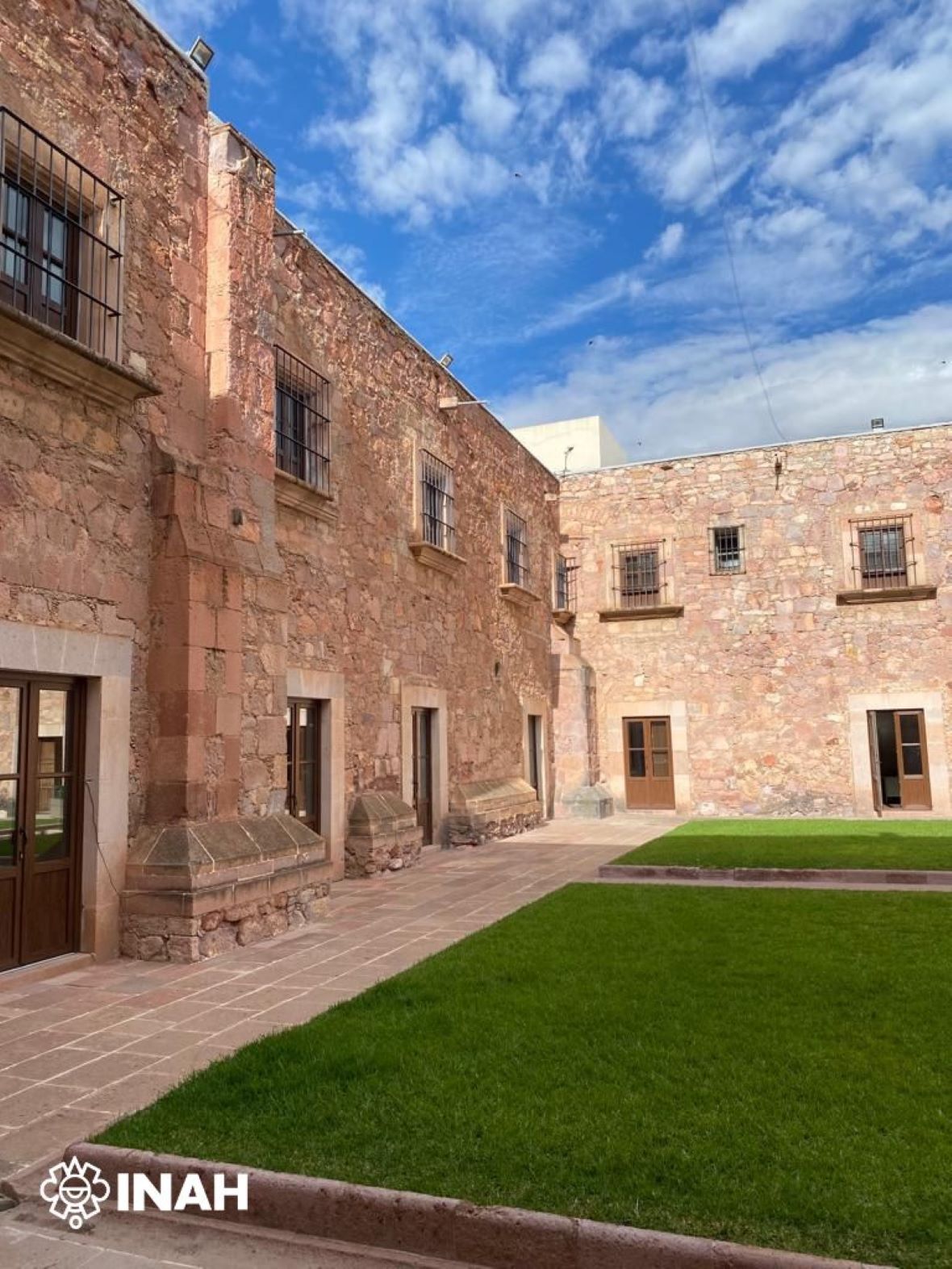
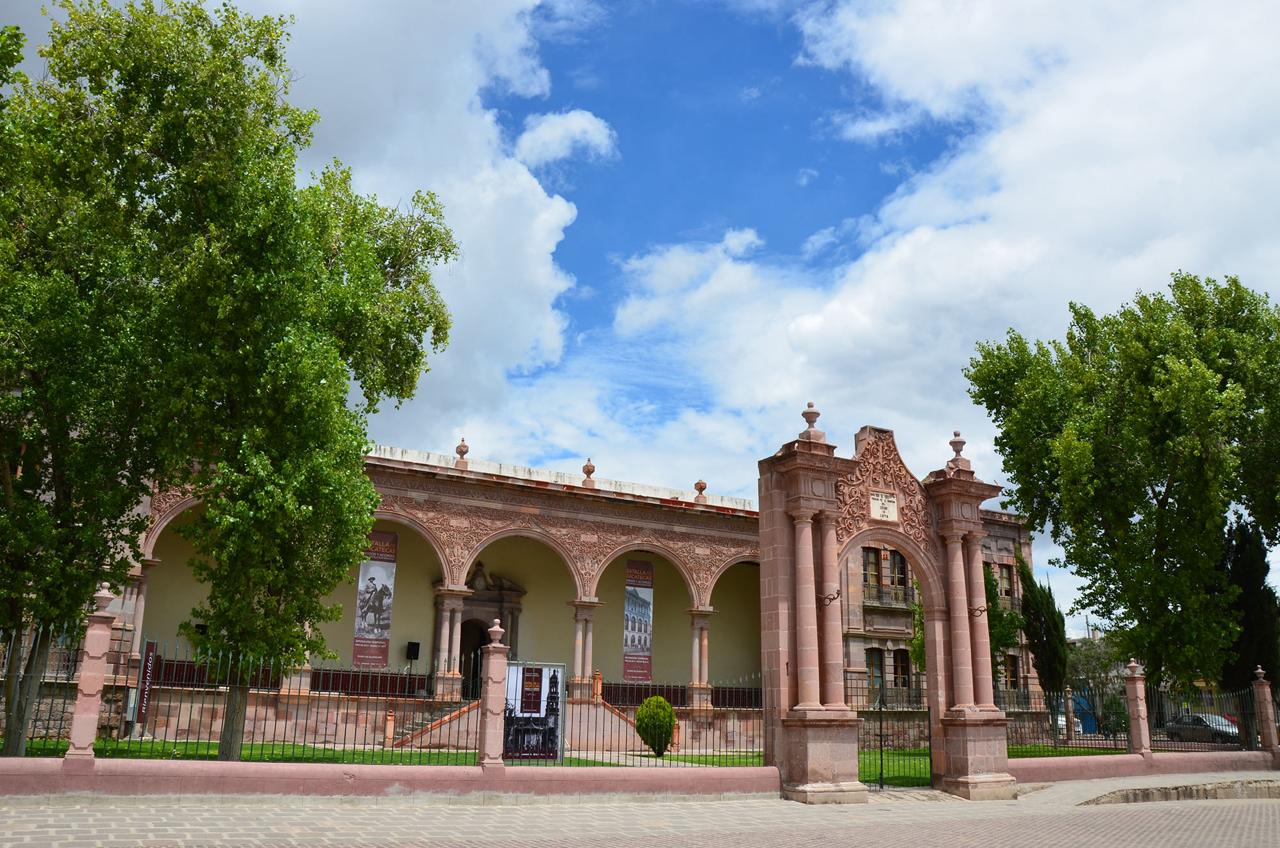
One of the most important Mexican museums of viceregal art, it sits in the former Propaganda Fide Monastery of Our Lady of Guadalupe of Zacatecas, built by Franciscans over the course of the eighteenth century. It originally covered an area of roughly ten square miles and was built with the help of contributors and the Zacatecas city government.
Due to the Reformation Laws, the friars were dismissed from the cloisters in 1859 and the Zacatecas state government allowed the building to be used for different purposes, including housing, a stables and a candle factory. Years later, some Franciscans returned and occupied the adjacent cloisters. In 1862, the Guadalupe school of arts and crafts was set up in a part of the building, on the initiative of the local authorities.
In 1878, the Guadalupe children’s orphanage was founded. In 1908, the Propaganda Fide schools were abolished, but not the Franciscan seminary. The building opened its doors as a museum of antiquities in 1917 and it was declared a national monument in 1939. In 1971, the orphanage closed, so its rooms were incorporated into the museum, which was declared a World Heritage Site by UNESCO in 2010.
The Museum of Guadalupe, located a few minutes outside the capital of Zacatecas, has 27 permanent galleries, which include an exhibit of viceregal art from the seventeenth century, and also of Mexican art up until the twentieth century. The art collection is comprised of pieces from the most important painters of New Spain, such as Cristóbal de Villalpando, Antonio de Torres, Gabriel José de Ovalle, Miguel Cabrera, Luis Juárez, Juan Correa, Nicolás Rodríguez Juárez and Antonio de Torres, and even twentieth-century painters such as Manuel Pastrana. There is also an exhibition of feather art, sculpture made from sugarcane paste, ivory and other materials, as well as a magnificent collection of sgraffito wooden statues of saints.
Among others, the museum visit includes the following areas: the facade, which stands out for its baroque style and its relief of Saint Francis of Assisi supporting the Virgin of Guadalupe; the San Francisco cloister, where a series of 26 canvases can be seen in their original order; a royal staircase, an example of baroque splendor, which retains three enormous canvases; the monastery library, which displays more than 9,000 volumes dating from the sixteenth century to the early twentieth century, and the Cloister of the Passion of Jesus, with 29 canvases which narrate the story of the martyrdom and crucifixion of Jesus.
Library
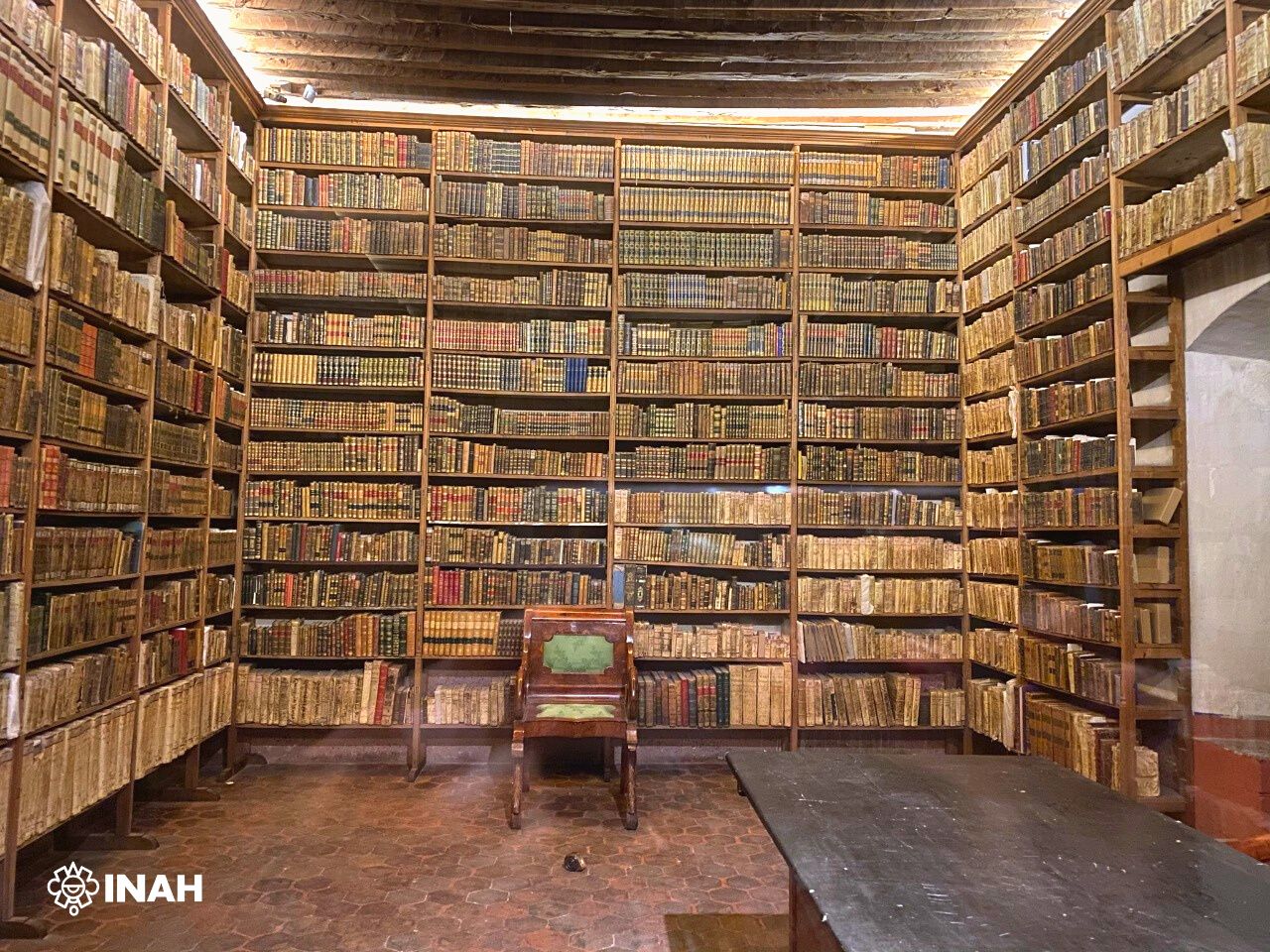
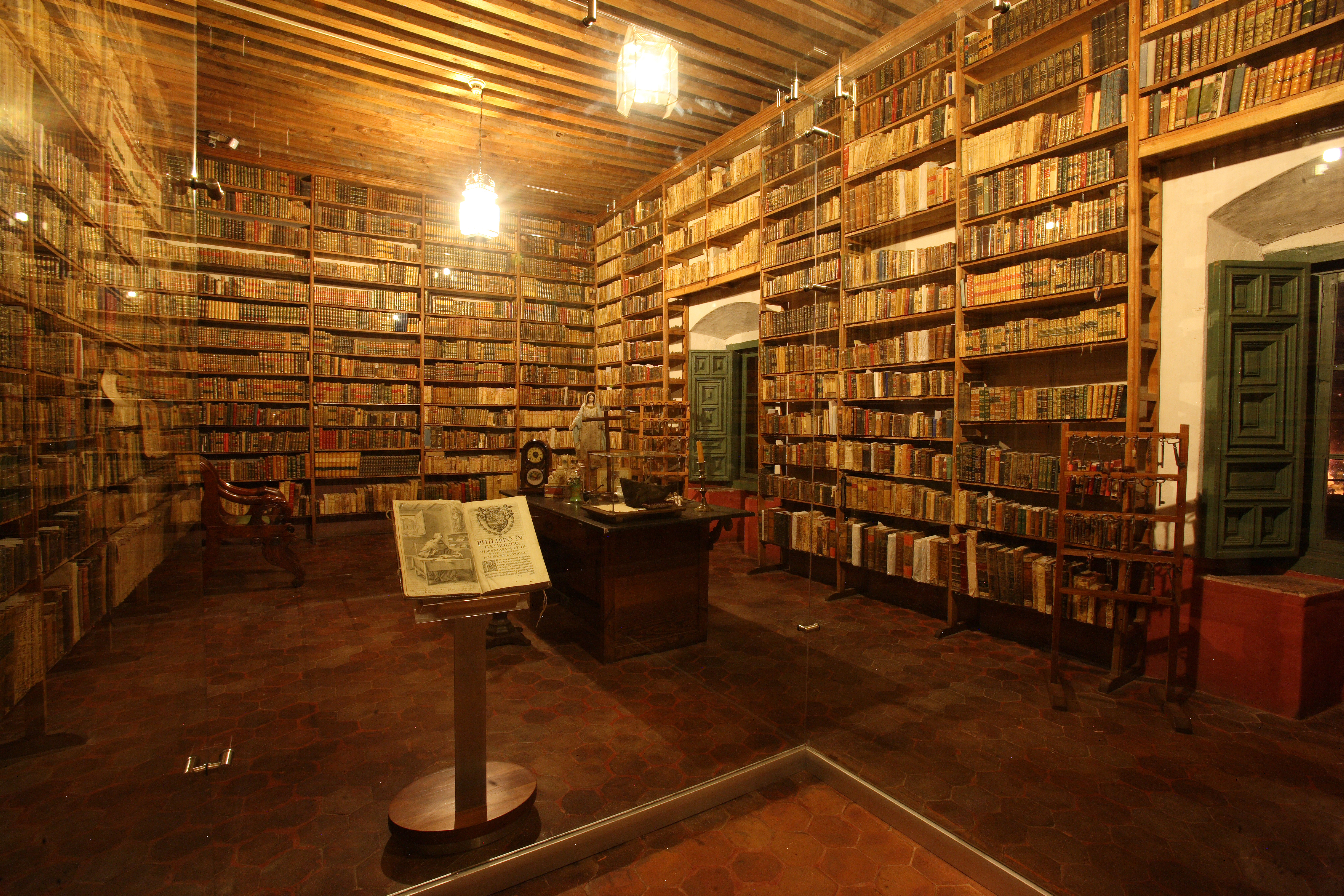
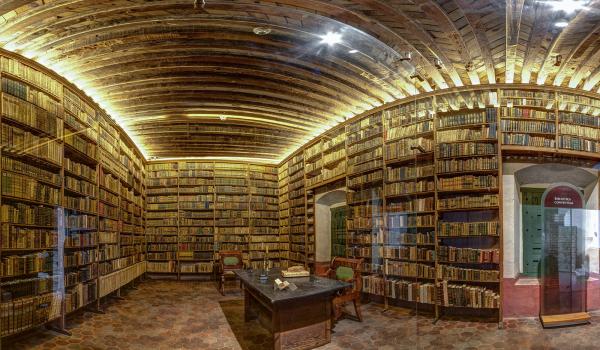
The Colegio de Propaganda Fide housed several libraries: the "Librería Guadalupana" (the main or common library), the novices’ library, and individual collections belonging to each friar. Together, they amassed over 30,000 volumes. More than 9,000 of these books are still preserved and on display,…
Library

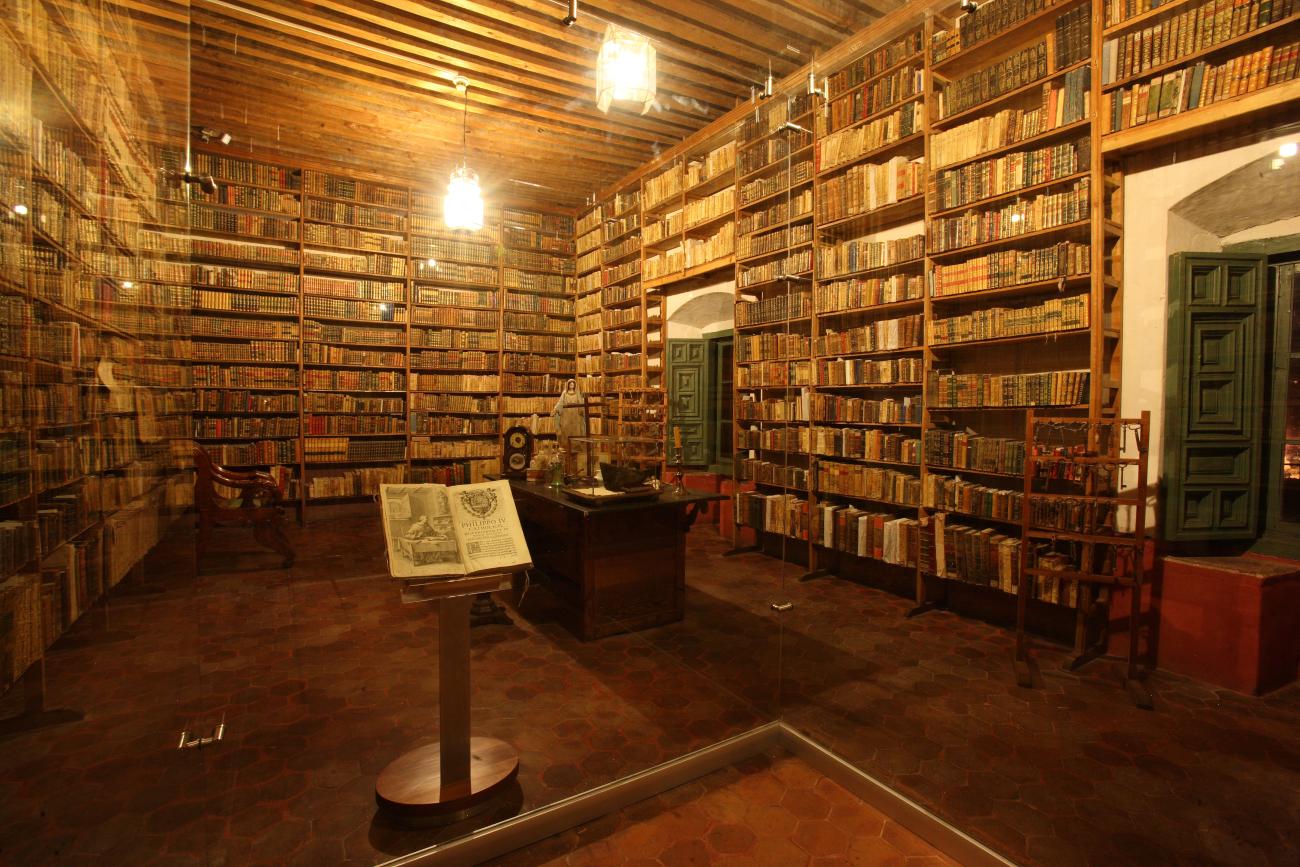
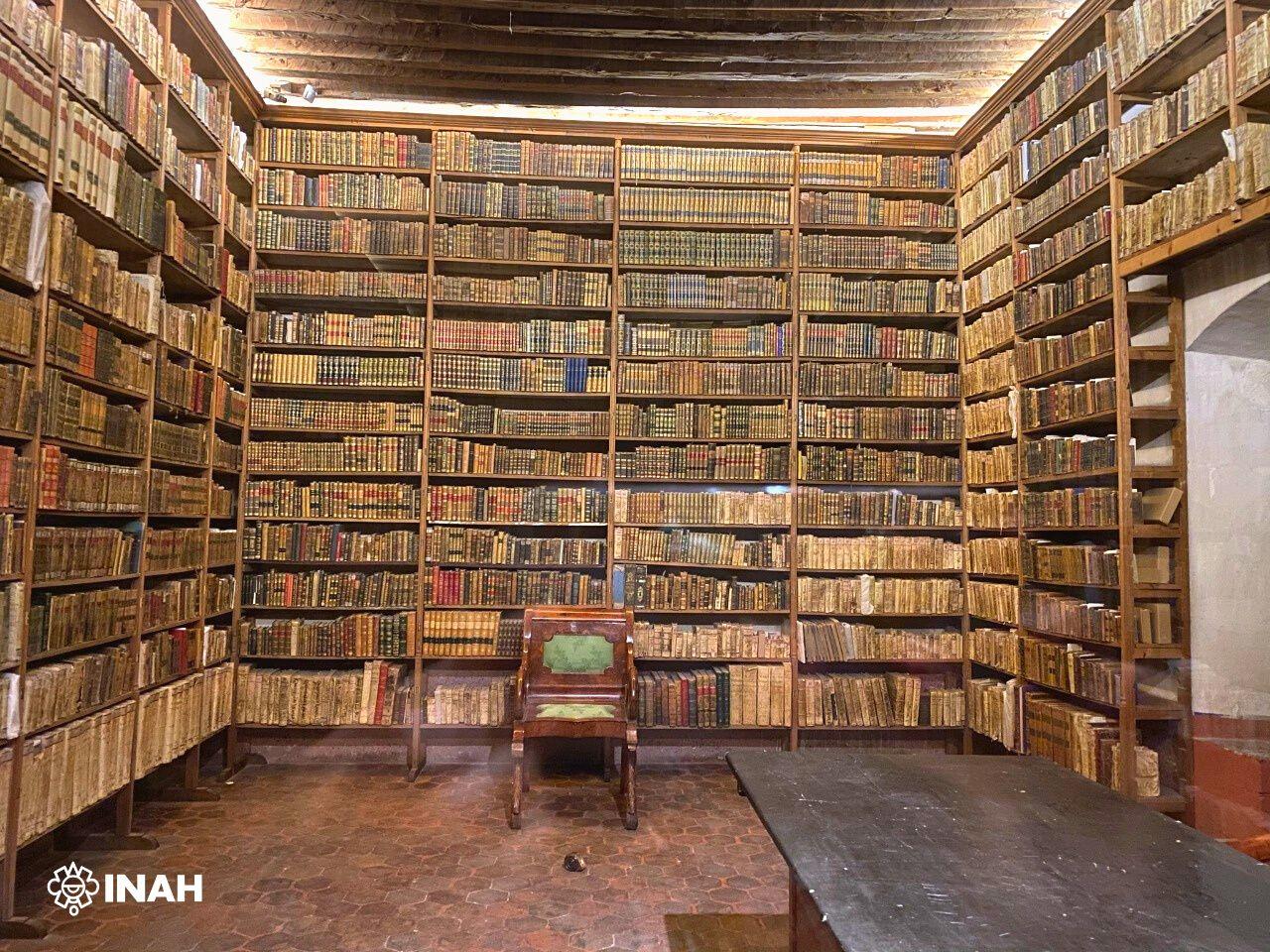
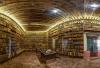
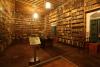
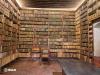
The Colegio de Propaganda Fide housed several libraries: the "Librería Guadalupana" (the main or common library), the novices’ library, and individual collections belonging to each friar. Together, they amassed over 30,000 volumes. More than 9,000 of these books are still preserved and on display, most of which were acquired by the Franciscans after the period of cloistering. A significant portion of the collection is written in Latin, Spanish, and other European languages.
According to the statutes of the Propaganda Fide branch of the Franciscan order, novices underwent at least six years of preparation. During this time, they studied a wide range of disciplines, including philosophy, theology, physics, cosmology, and native languages. Future missionaries first read liturgical books and the Bible, followed by theological works and, eventually, the lives of saints. The library, often referred to as the "librería antigua", was considered a privileged space for safeguarding knowledge. The foundation of this library is credited to Friar Antonio Margil de Jesús, who requested the first shipment of books.
Among the most notable titles are the Bible, the Council of Trent, the Mexican Provincial Council, "Mystical City of God", and "The City of God"". The topics covered are diverse, including hagiography, asceticism, catechetics, canon law and other religious subjects, as well as algebra, geography, physics, philosophy, chemistry, natural history compendiums, atlases, moral theology, zoology, astronomy, Latin grammar, and the history of Mexico, among others.
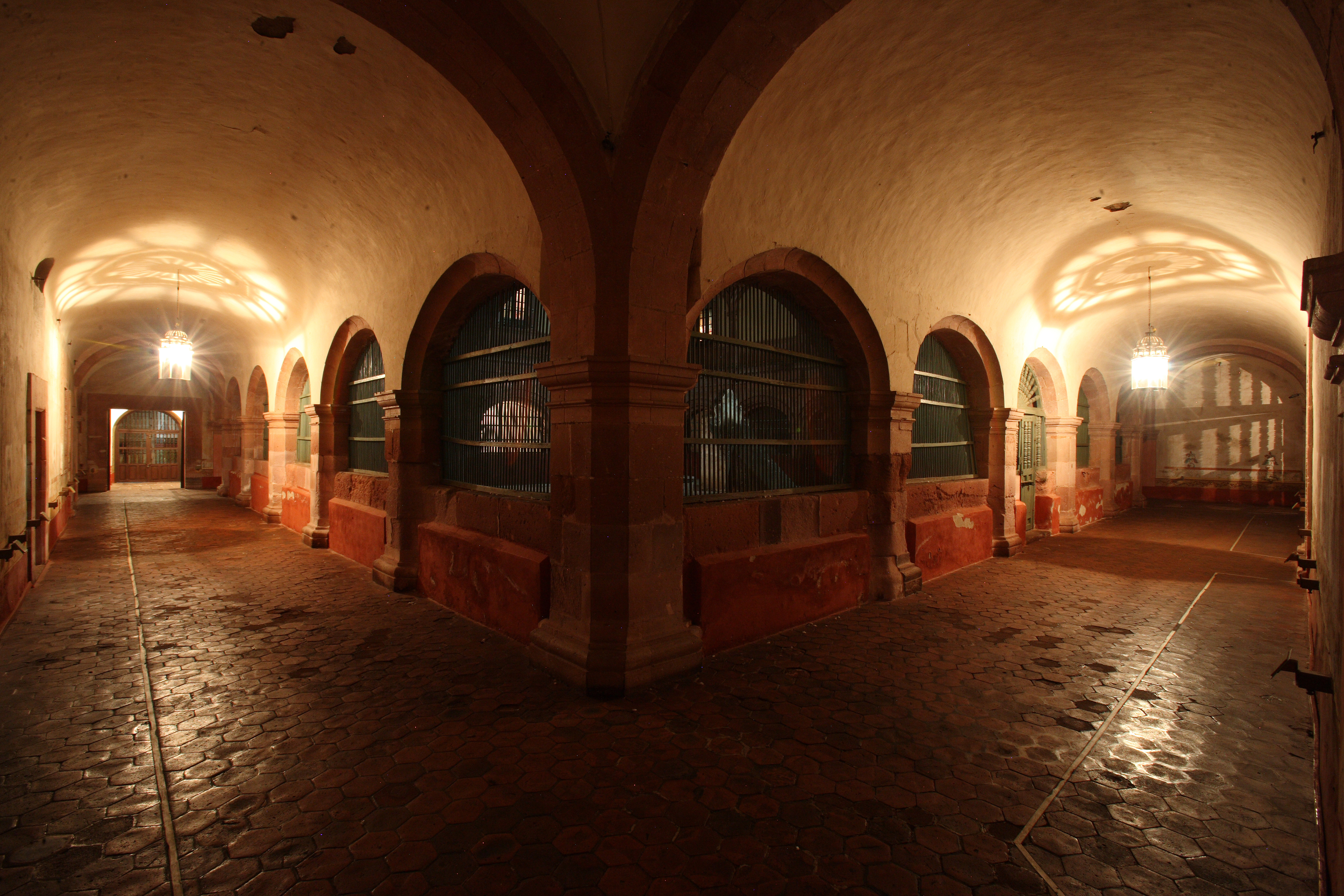
Cloister of the Passion of Christ
The upper floor of this cloister was built between 1750 and 1774. This level originally housed classrooms, the antechapel, the guardian’s cell, and the bell-ringer’s cell. Over 105 years, these spaces underwent various changes in use, with only the bell-ringer’s cell remaining intact. Like the…
Cloister of the Passion of Christ
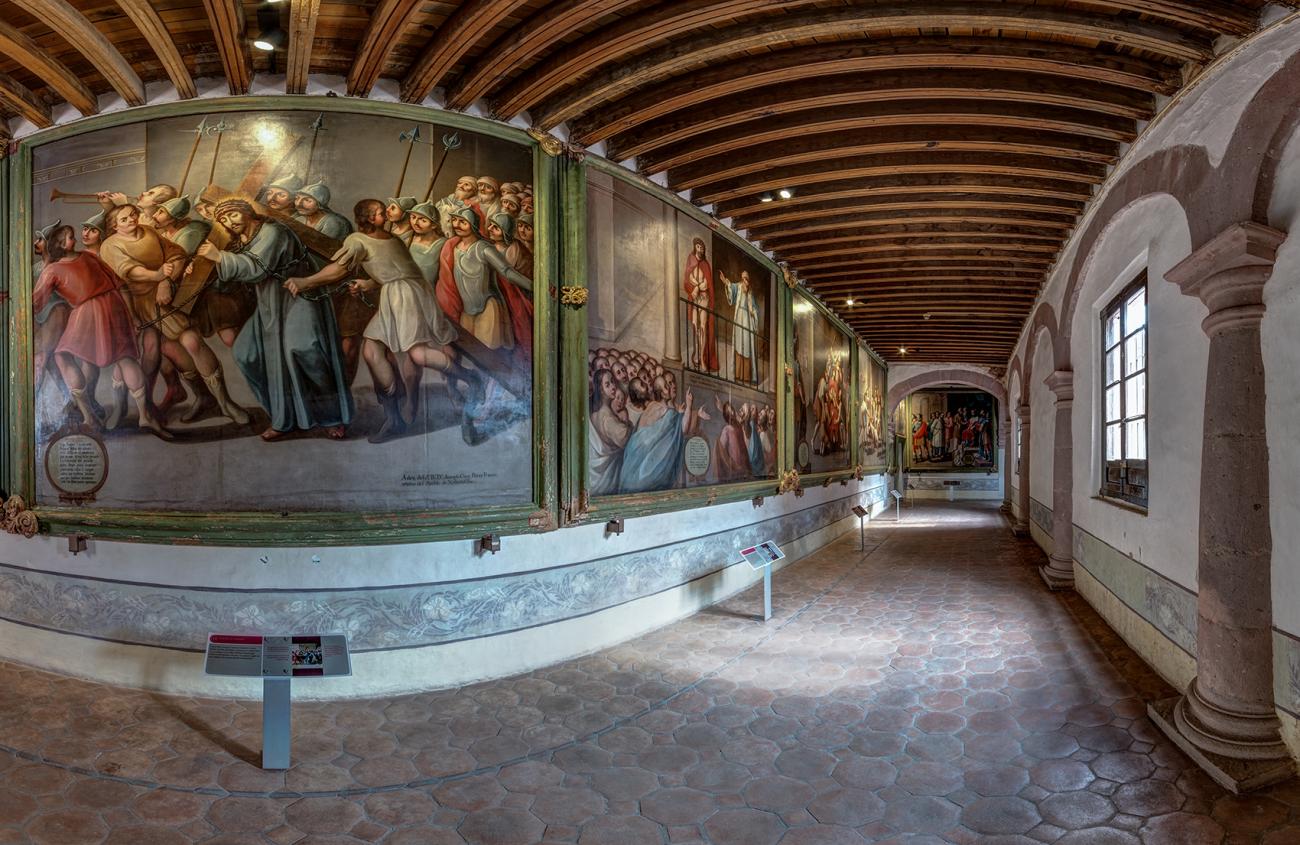
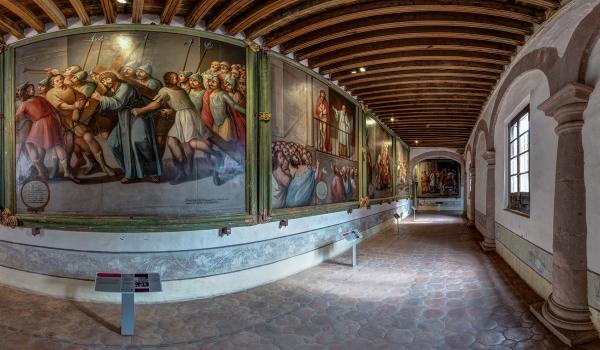
The upper floor of this cloister was built between 1750 and 1774. This level originally housed classrooms, the antechapel, the guardian’s cell, and the bell-ringer’s cell. Over 105 years, these spaces underwent various changes in use, with only the bell-ringer’s cell remaining intact. Like the ground floor, the arcades were originally open; the walls that now enclose the arches were likely added when the building was converted into a museum in 1917, possibly to create more wall space for displaying paintings.
The Franciscan order strongly promoted reflection on Christ’s suffering and death. The paintings in this cloister served as tools for the friars and novices to meditate on the Passion, a term derived from the Latin flagrantia, meaning ardor or pain. The series consists of 29 scenes, from Christ’s triumphant entry into Jerusalem on Palm Sunday to His burial. The artist includes the trial of Christ and all 14 Stations of the Cross.
Each canvas features inscriptions, including rhymed verses commenting on the depicted scenes. Some paintings bear the abbreviation A dev. de (“Out of devotion from”) followed by the name of the donor, including clergymen from Durango, San Miguel el Grande (now San Miguel de Allende), and residents of Villa de Guadalupe. These inscriptions were likely added during the 19th century.
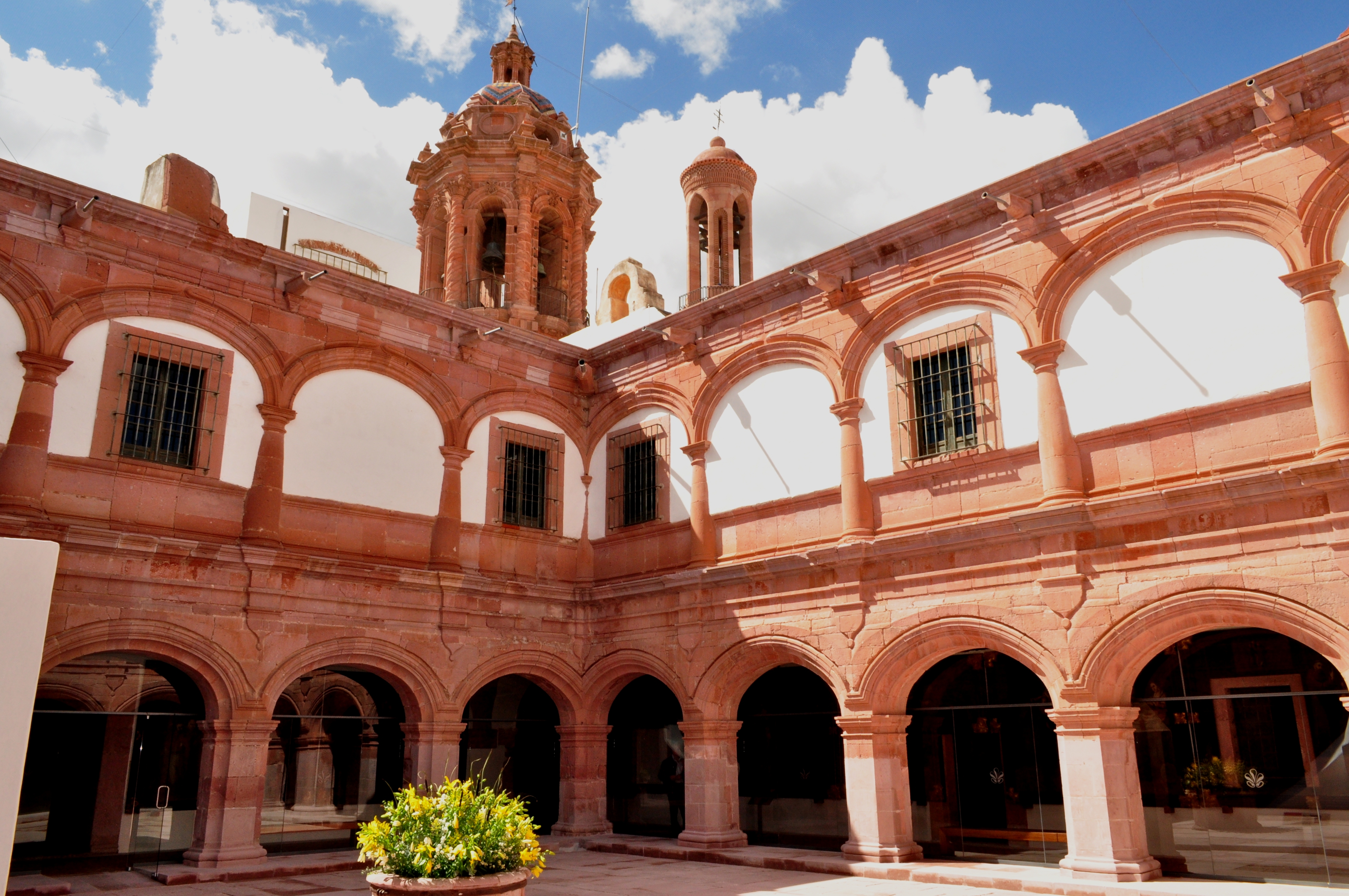
Cloister of Saint Francis
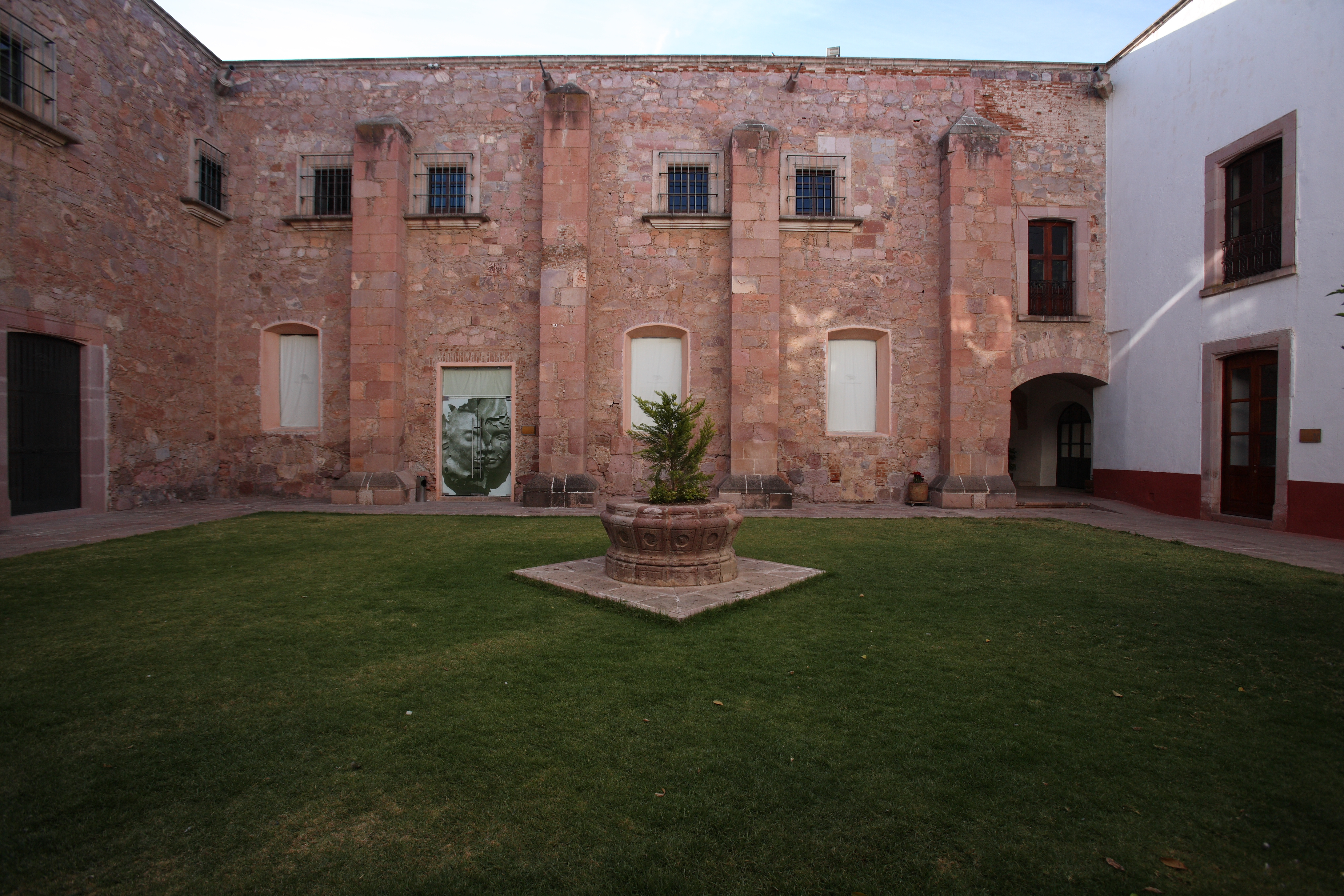
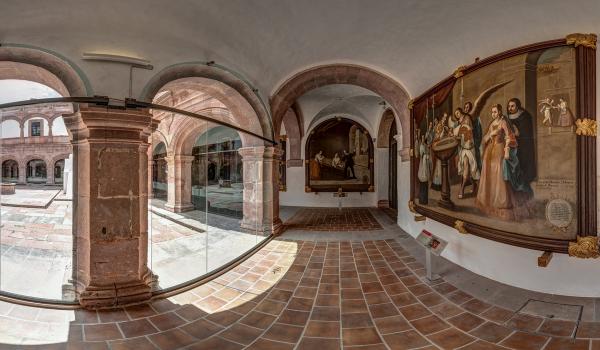
The word cloister comes from the Latin claustrum, meaning a space open to the sky and closed to the world. This cloister was dedicated to Saint Francis of Assisi, founder of the Franciscan Order, and was built between 1750 and 1775. At its center is a courtyard and a cistern completed in 1881.It…
Cloister of Saint Francis
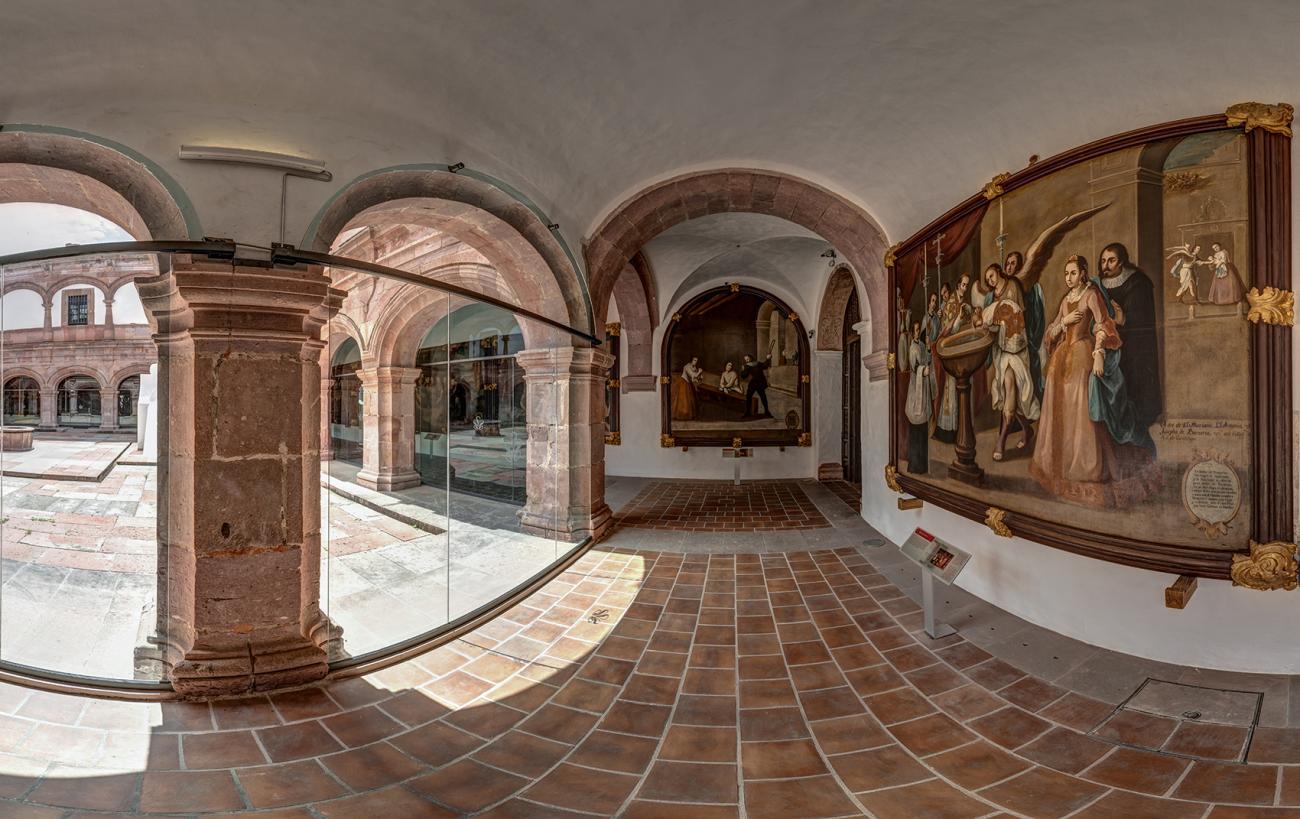
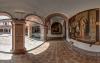
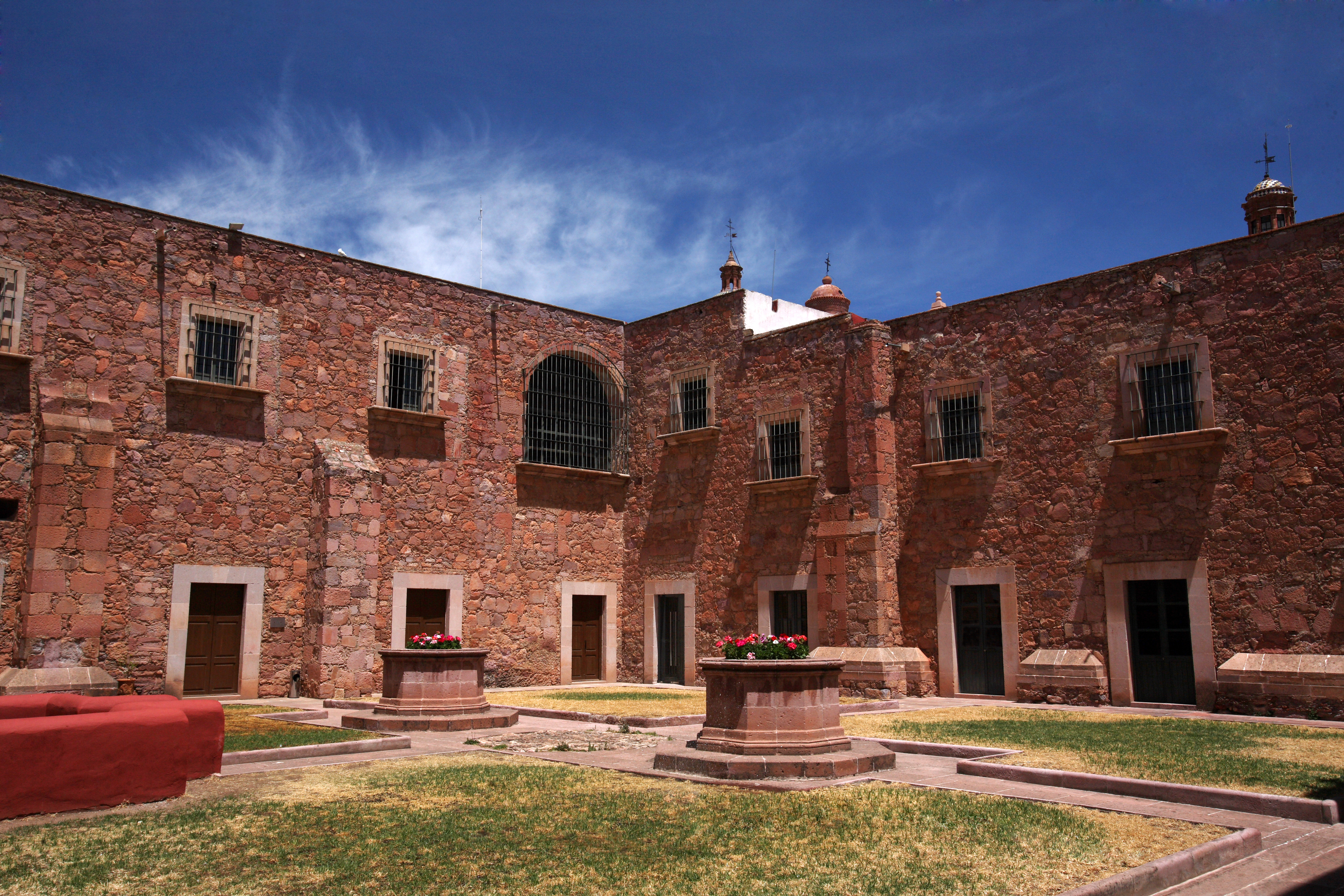
The word cloister comes from the Latin claustrum, meaning a space open to the sky and closed to the world. This cloister was dedicated to Saint Francis of Assisi, founder of the Franciscan Order, and was built between 1750 and 1775. At its center is a courtyard and a cistern completed in 1881.
It contains 26 oil paintings on canvas created specifically for this space, depicting key moments in the life of Saint Francis. These works were valuable pedagogical tools for the daily instruction of those living at the Colegio de Propaganda Fide in Guadalupe, Zacatecas. This series is of great significance: though similar collections existed in other New Spanish convents, this is the only one preserved in full and in its original location. Each painting includes explanatory verses and the name of the benefactor who funded its creation. The artist portrays Saint Francis not only as the founder of a religious family but also as a model for men and women of his time. The images depict biographical episodes and miracles attributed to him.
The iconography of the cloister carries an allegorical message encouraging the imitation of Christ. Each canvas reflects the Baroque spirit of the time, with open compositions that convey movement and draw the viewer into the scenes, turning them into witnesses to the saint’s life and deeds.
Together, these paintings form a rich tapestry of Franciscan existential scenes, expressing the founder’s ideals: emulating Christ and the apostles through a life of individual perfection and poverty, combined with a broad popular mission to save souls—both faithful and non-believers—while maintaining strict obedience to the Catholic Church.
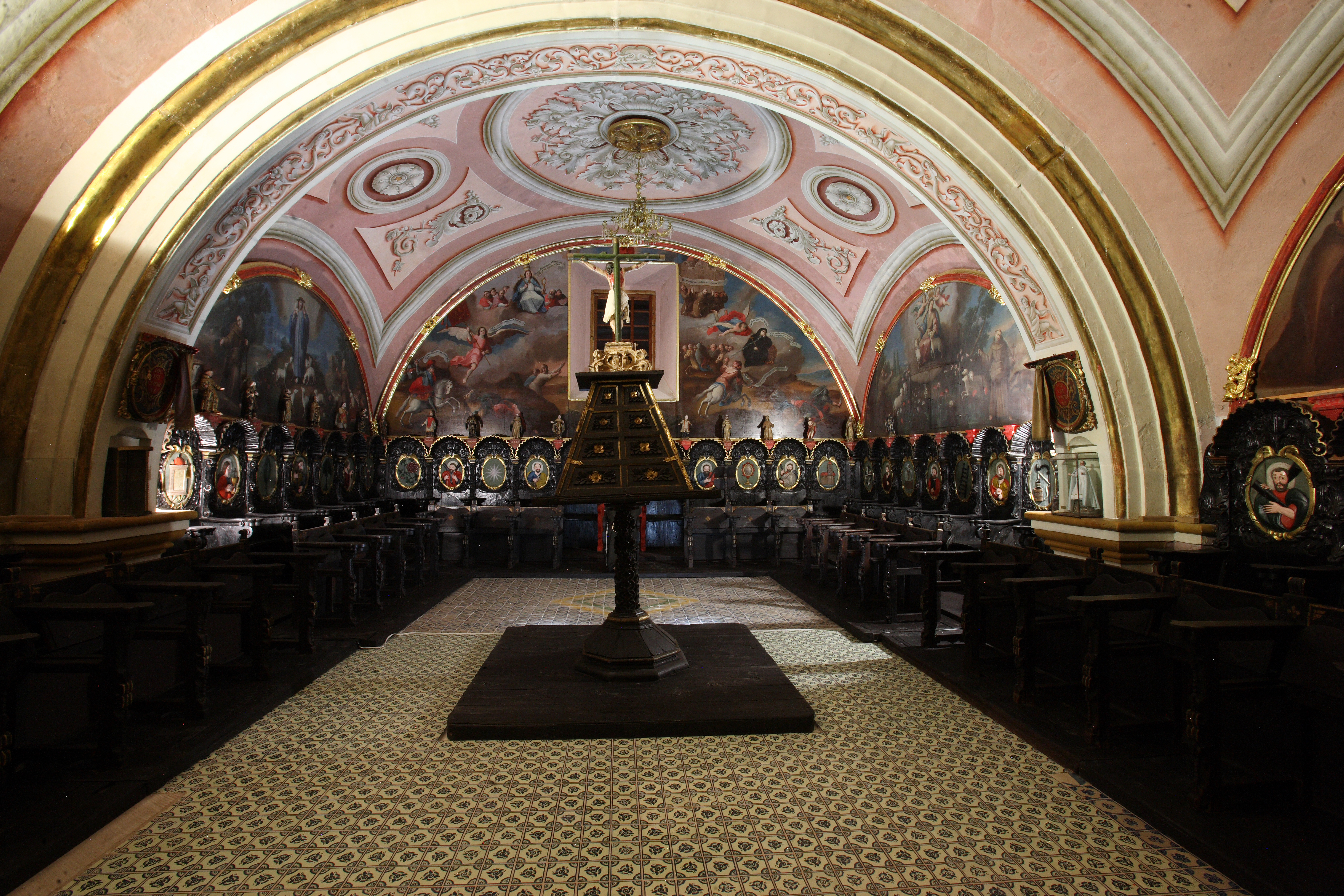
Choir
In the viceregal period, convent churches reserved an upper level opposite the main altar for the choir. This was where the religious community gathered to chant psalms, hymns, and prayers at designated hours, following the rules of their order. Some of these choir lofts, such as the one in the…
Choir
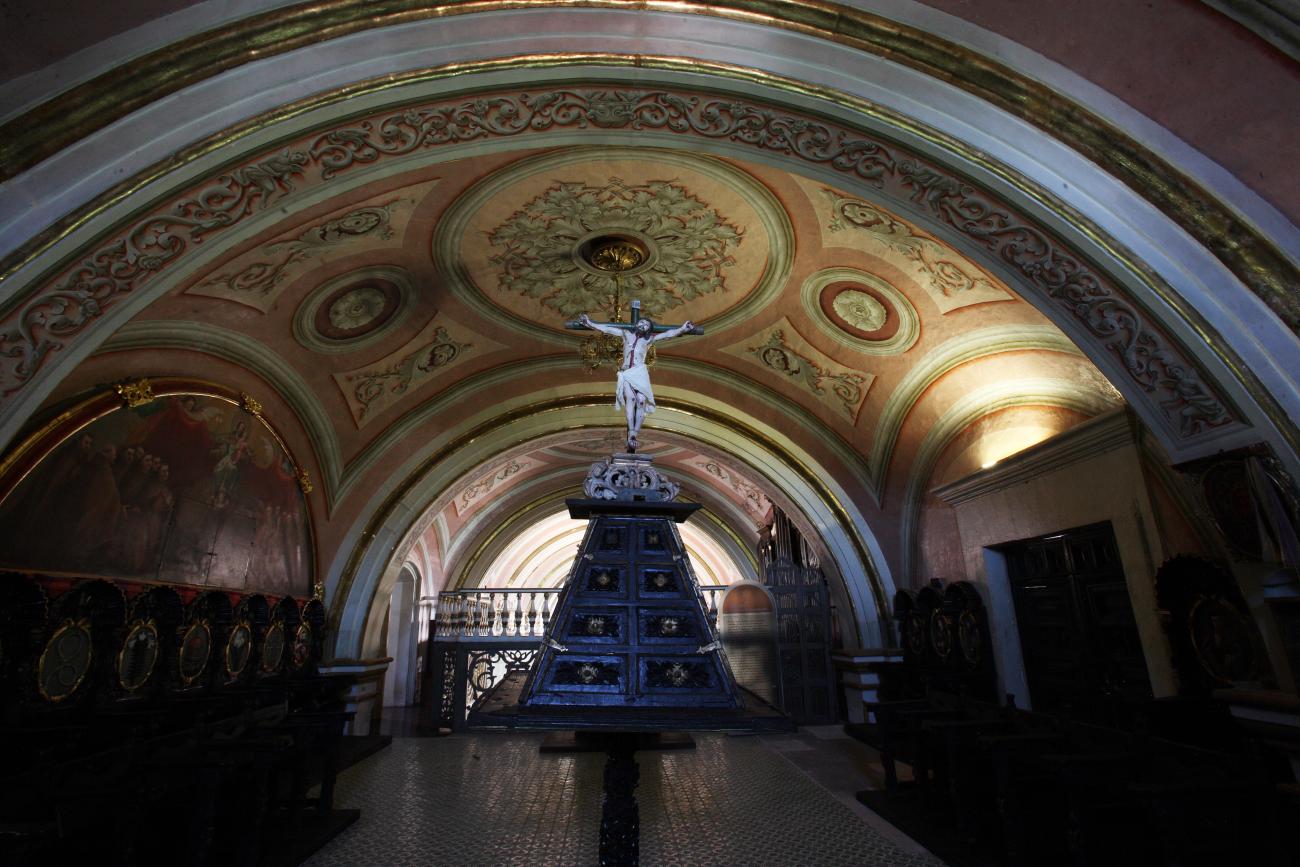
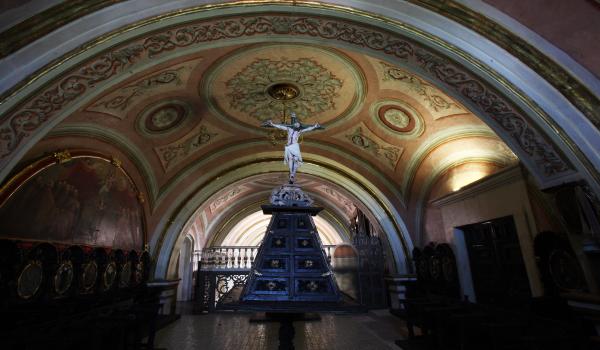
In the viceregal period, convent churches reserved an upper level opposite the main altar for the choir. This was where the religious community gathered to chant psalms, hymns, and prayers at designated hours, following the rules of their order. Some of these choir lofts, such as the one in the Colegio de Guadalupe, were furnished with carved wooden choir stalls adorned with Marian symbols. Between each stall stand full-body sculptures of various saints. At the center, a wooden lectern (facistol) held large choir books containing the community’s sung prayers.
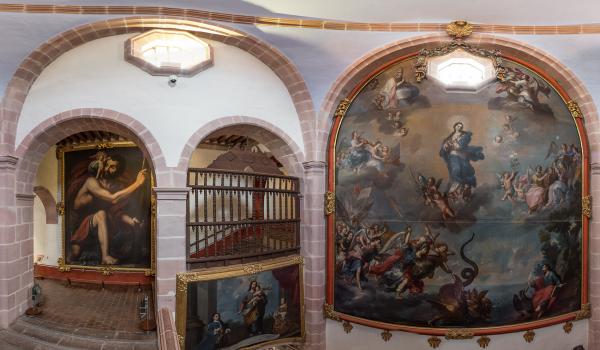
Though the artists responsible for Guadalupe’s magnificent ensemble remain unknown, the quality of the carving and polychromy can still be admired in its original location. Among the depicted saints are apostles holding the instruments of their martyrdom, interspersed with Marian symbols from the Litany of Loreto. At the center stands a life-size sculpture of Saint Francis of Assisi. Unlike the other painted and gilded sculptures, this one was designed to be dressed and includes a mechanism allowing it to be positioned seated or standing, depending on the needs of various ceremonies.
The walls of this space are adorned with large-format paintings that reflect Franciscan devotions, including Saint Joseph and a Franciscan allegory depicting the battle against heresy, located on the main wall.
Grand Staircase
The upper level of the building was constructed between 1750 and 1774. Its walls are decorated with monumental paintings by some of the most renowned 18th-century artists, including Miguel Cabrera, José de Ibarra, and Nicolás Rodríguez Juárez. Three of the largest canvases—by Cabrera and José Ríos…
Grand Staircase
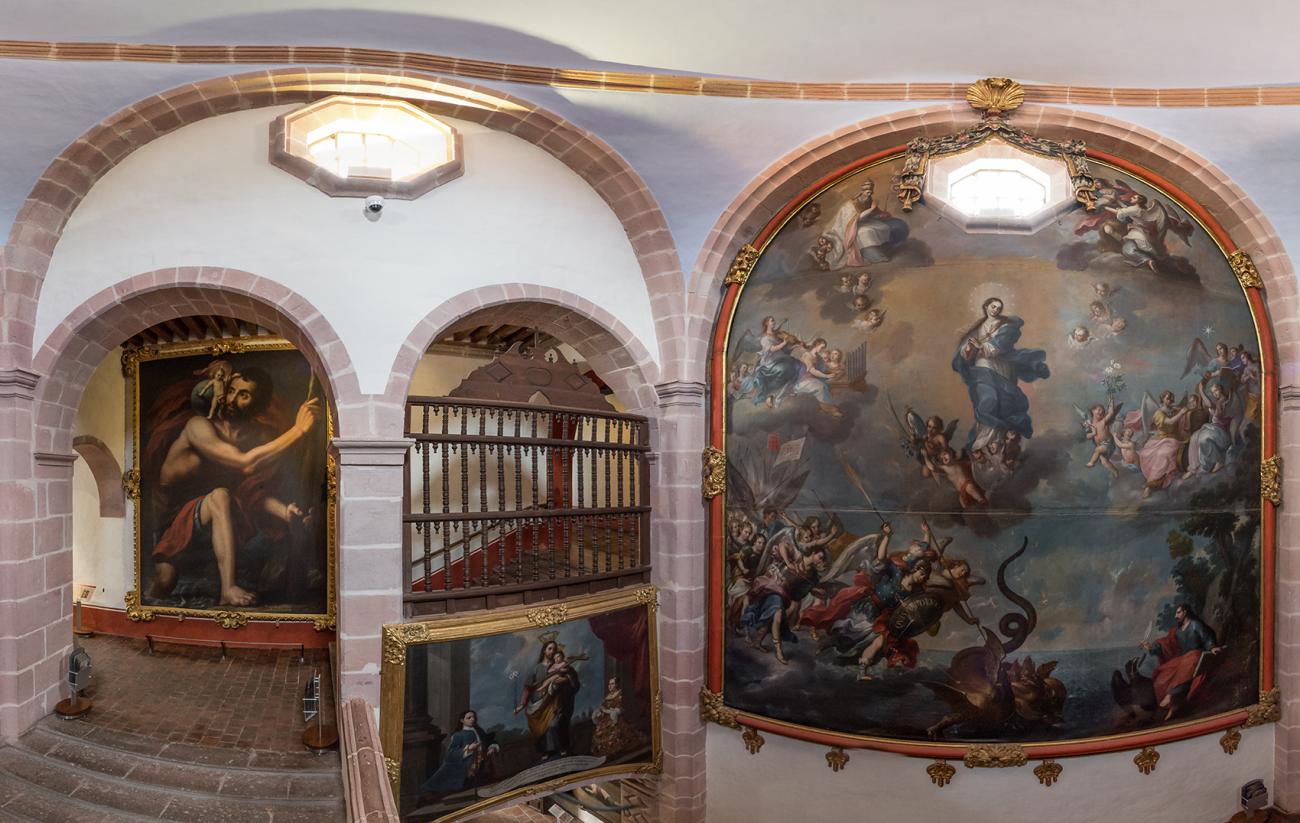
The upper level of the building was constructed between 1750 and 1774. Its walls are decorated with monumental paintings by some of the most renowned 18th-century artists, including Miguel Cabrera, José de Ibarra, and Nicolás Rodríguez Juárez. Three of the largest canvases—by Cabrera and José Ríos Arnáez—were designed specifically for this space. This iconic area of the Museo de Guadalupe exemplifies the splendor of Mexican Baroque art.
The building is unique among the former Propaganda Fide Colleges in that much of its original artwork remains in situ. The grand staircase, choir, and upper and lower cloisters all bear witness to this remarkable preservation.
Porter's Lodge
The "portería" served as the threshold to the Colegio de Guadalupe and was likely built after 1775, when the cloisters of the Passion of Christ and of Saint Francis were completed. It was customary at the time to add the portico as the complex expanded. This space was overseen by the porter father…
Porter's Lodge
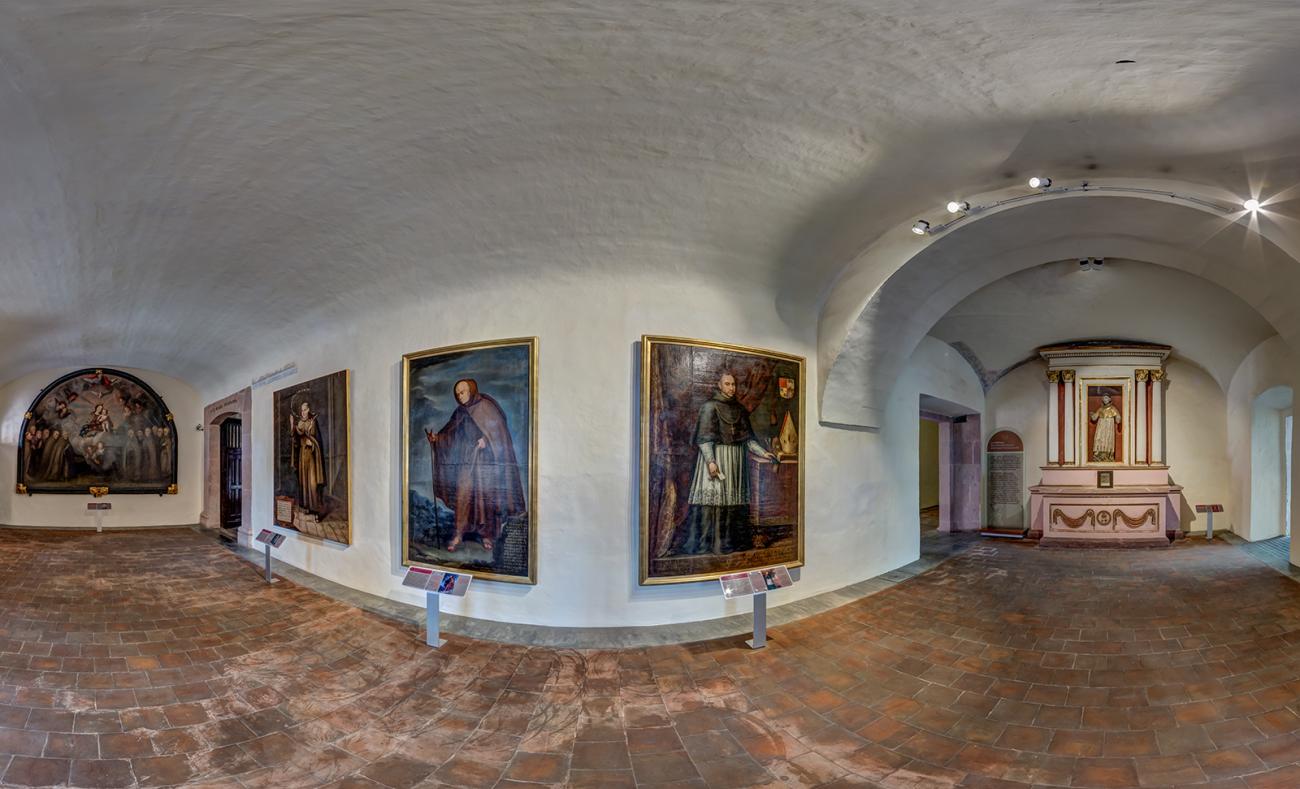
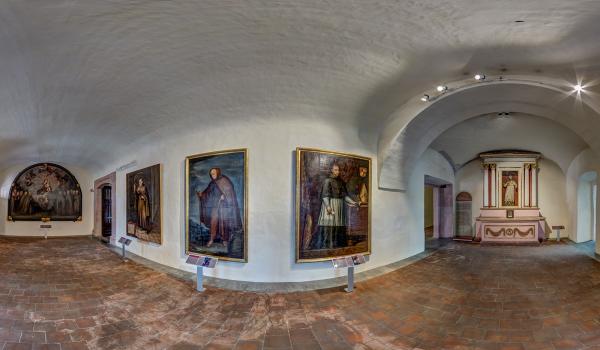
The "portería" served as the threshold to the Colegio de Guadalupe and was likely built after 1775, when the cloisters of the Passion of Christ and of Saint Francis were completed. It was customary at the time to add the portico as the complex expanded. This space was overseen by the porter father, who played a key role as the eyes and ears of the guardian.
The porter kept track of friars who left the college and laypeople who occasionally entered, and he also reported on missionaries who, for various reasons, needed to stay overnight.
In this room stands the frontal of a Neoclassical altar. Recent research suggests that during the Reform era (1856–1859), the college was partially divided, with one section remaining under Franciscan care. During that time, this room may have functioned as a small chapel reserved for the friars. In 1878, the Franciscans ceded the porter's lodge, the upper and lower cloisters, and the choir to the government of Zacatecas. The topographic survey for this division was carried out by surveyor Sixto Espinoza.
Here you can also find portraits of the founders of the Colegio de Guadalupe: Friars José Guerra, Antonio Margil, and Pedro de la Concepción y Urtiaga.
Martyrs and Saints
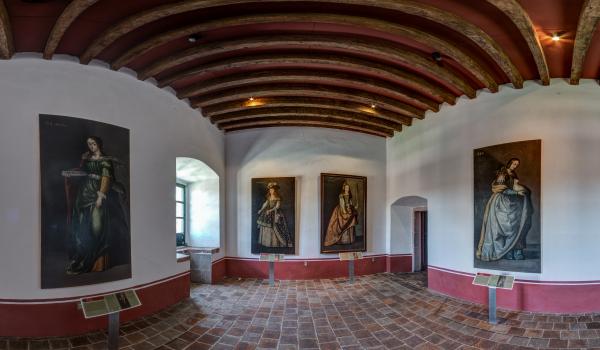
The word devotion is understood as “love and veneration, religious fervor, non-obligatory pious practices; a special inclination or fondness, and generally, a good custom.” This concept defined the society that, by the 18th century, was fully established in what is now Mexico, then known as New…
Martyrs and Saints
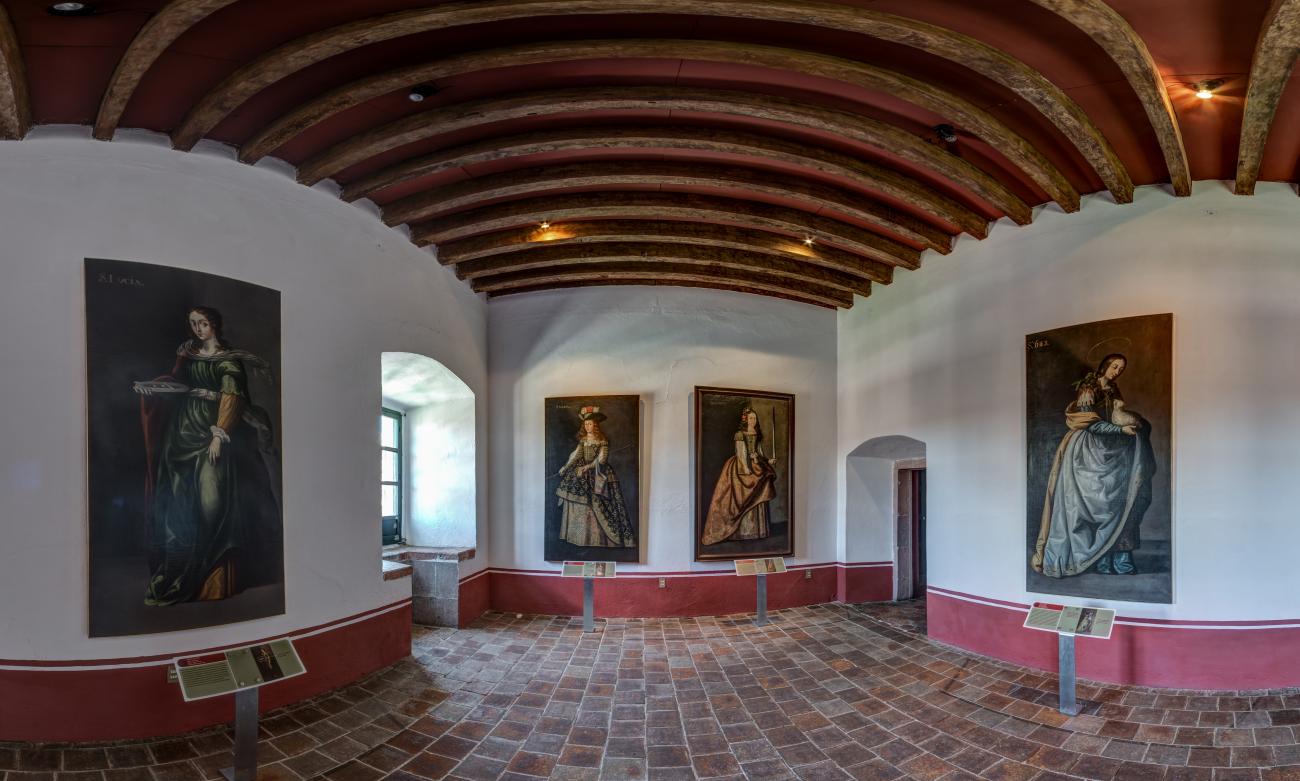
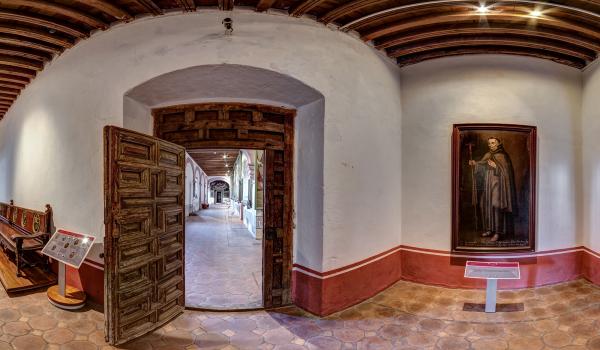
The word devotion is understood as “love and veneration, religious fervor, non-obligatory pious practices; a special inclination or fondness, and generally, a good custom.” This concept defined the society that, by the 18th century, was fully established in what is now Mexico, then known as New Spain. The prevailing mindset revolved around salvation and sacrifice, regardless of economic status or ethnicity.
During the Baroque period, devotion and the veneration of saints, biblical narratives, and religious icons as life models were further intensified. This fervor nourished imagination and sensibility through beliefs, traditions, and customs that still endure today.
Missionaries and Inhabitants of the College
The founding decree of the College of Guadalupe, dated 1704, mentions that the apostolic work was mainly directed toward the province of Coahuila and also to the lands of Texas. Typically, around 30 religious men lived at the College, and the friars who went out to evangelize had to spend at least…
Missionaries and Inhabitants of the College
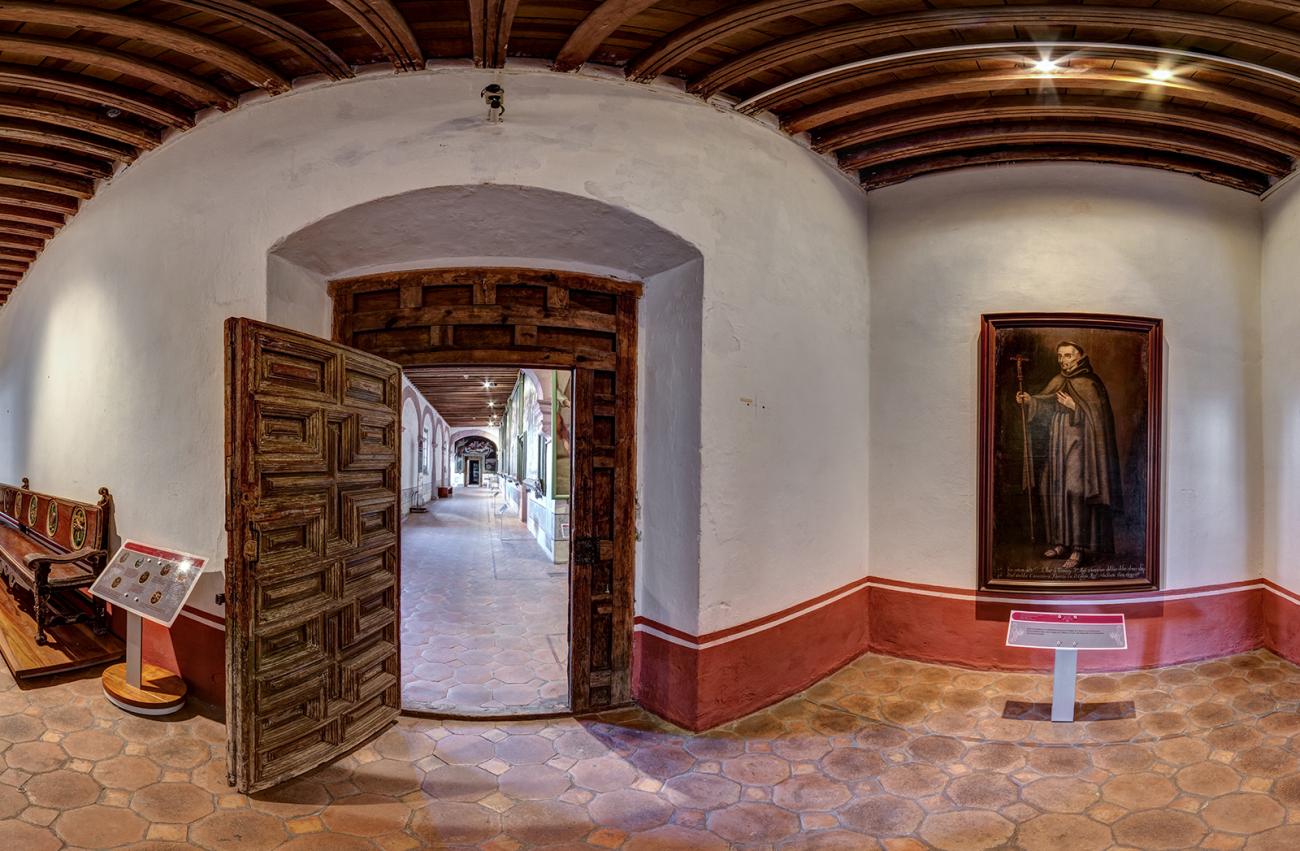
The founding decree of the College of Guadalupe, dated 1704, mentions that the apostolic work was mainly directed toward the province of Coahuila and also to the lands of Texas. Typically, around 30 religious men lived at the College, and the friars who went out to evangelize had to spend at least two years preparing within this institution.
The first missions were led by Friar Antonio Margil de Jesús along the banks of the Sabinas River in Coahuila, but the hostility of the indigenous people prevented them from thriving. Nevertheless, the friars' determination was not deterred. By 1716, they had established some missions along the San Antonio and Guadalupe rivers in Texas and even managed to reach the borders of French Louisiana. By the late 18th century, they had also founded over 14 towns in the Mexican Gulf Coast region (present-day Tamaulipas), took charge of 15 missions left by the Jesuits in the Sierra Tarahumara, and reached Alta California. Thus, the work of the missionaries of Guadalupe is reflected in more than thirty mission foundations, covering much of the northern frontier during the colonial period.

Theology Hall
In the Colleges of Propaganda Fide, three mandatory courses were taught: theology, the arts or philosophy, and grammar. Special emphasis was placed on theological studies, which were considered essential for the training of those who would evangelize the unconverted. One of the most studied authors…
Theology Hall
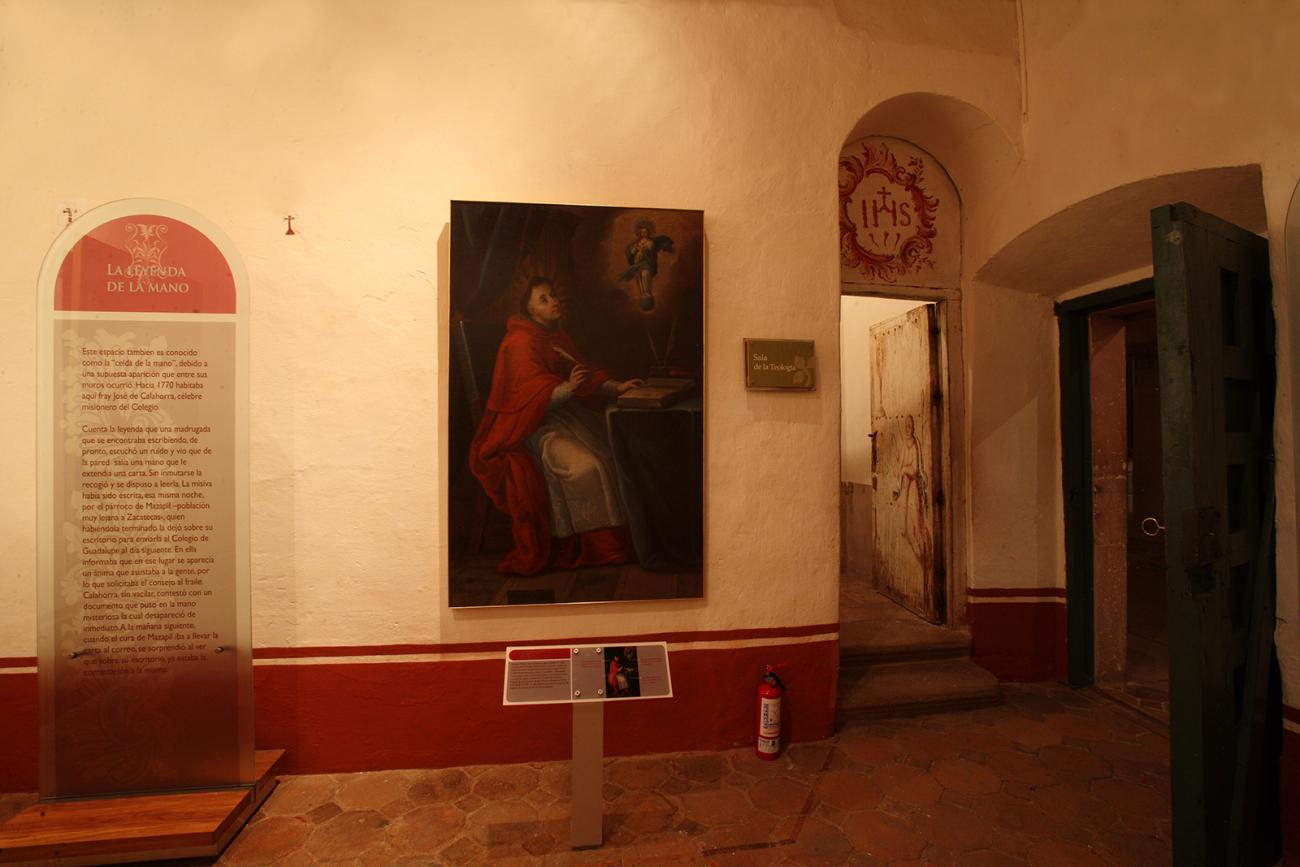
In the Colleges of Propaganda Fide, three mandatory courses were taught: theology, the arts or philosophy, and grammar. Special emphasis was placed on theological studies, which were considered essential for the training of those who would evangelize the unconverted. One of the most studied authors was the Franciscan saint, Saint Bonaventure, also known as the "Seraphic Doctor," particularly for his book "The Mirror of Regular Discipline".
Due to its importance, the theology hall had to be located in the cloister, within the main core of the College. A "small pulpit" was also placed so that sick or elderly friars could attend religious services without needing to go down to the temple.
Philosophy Hall
In the 18th-century intellectual world of New Spain, the Colleges of Propaganda Fide, dedicated to the training of missionaries, placed equal value on the study of theology and philosophy. Among the most significant figures in the field of philosophy was the Franciscan Juan Duns Scotus (1266-1308…
Philosophy Hall
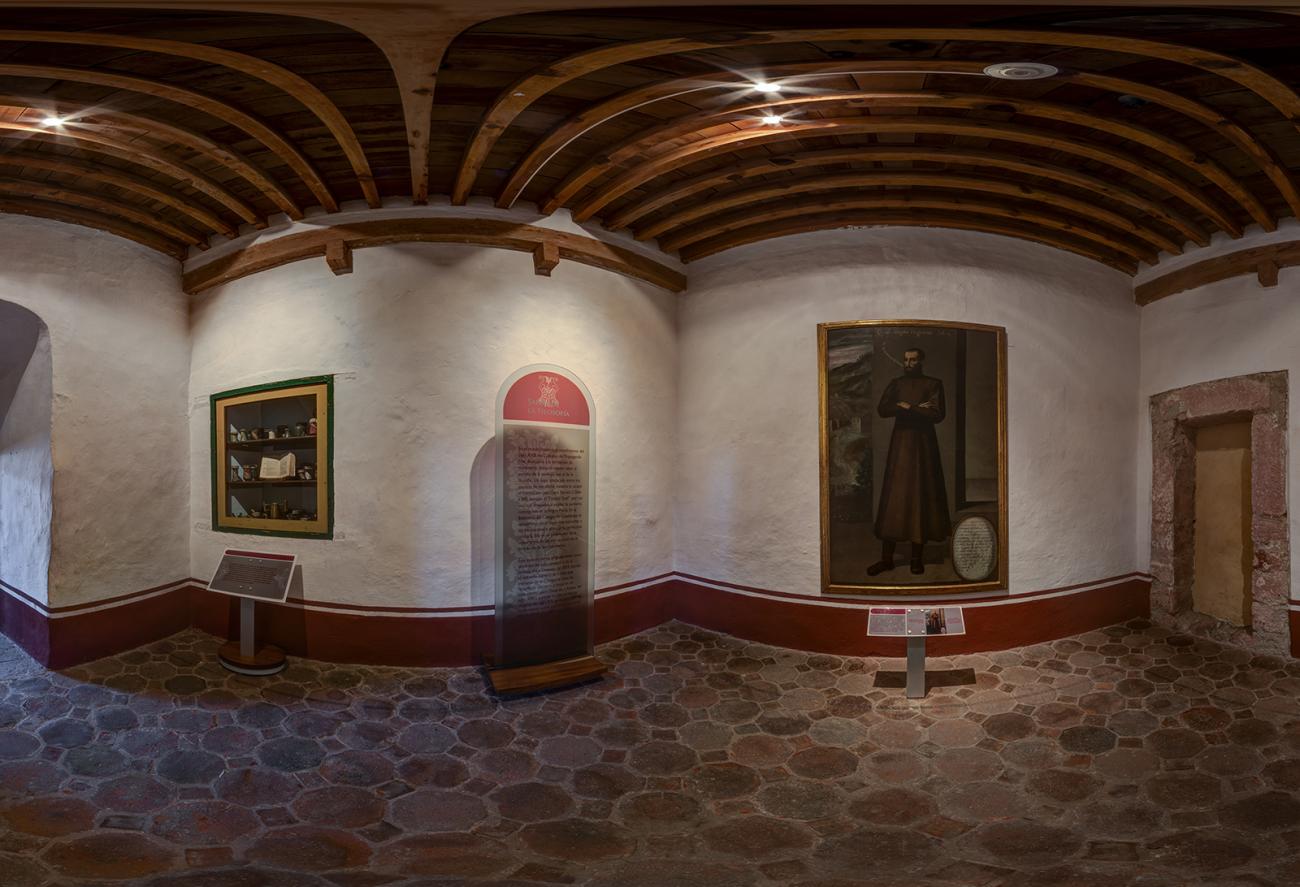
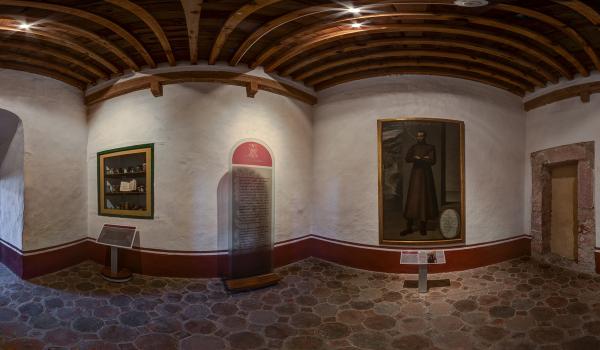
In the 18th-century intellectual world of New Spain, the Colleges of Propaganda Fide, dedicated to the training of missionaries, placed equal value on the study of theology and philosophy. Among the most significant figures in the field of philosophy was the Franciscan Juan Duns Scotus (1266-1308), known as the “Subtle Doctor” for his writings that emphasized the Immaculate Conception of the Virgin Mary. In the Library of the College of Guadalupe, there are works by him urging the Franciscans to attain Christian perfection. This serves as a testament to the importance of certain authors in the formation of missionaries.
This space originally served as the vestibule for the adjacent classroom and small pulpit. After 1859, due to the reduced number of friars residing at the College, philosophy classes began to be held in this very room. Later, at the end of the 19th century and during the first two decades of the 20th century, an improvised pharmacy was set up, which included some of the medicinal herbs that are now on display.
Camino Real de Tierra Adentro
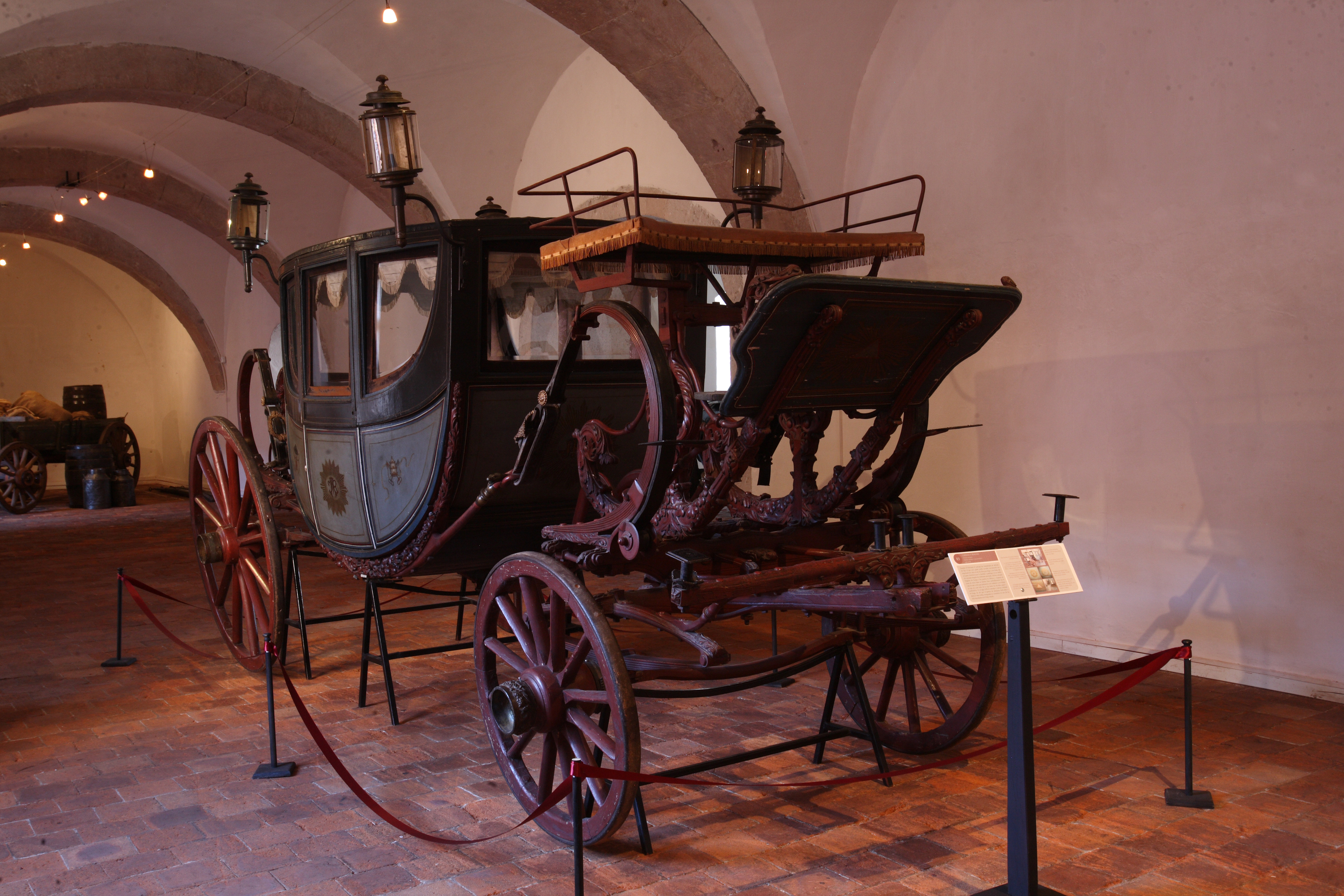
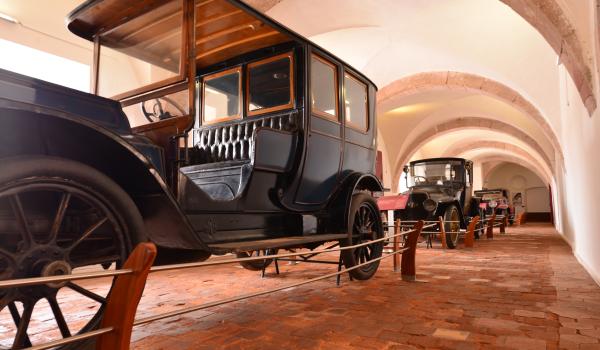
The exhibition room dedicated to the Camino Real de Tierra Adentro showcases eight modes of transportation from the 18th to the 20th centuries. Through these objects, visitors can observe how the discovery of silver mines in Zacatecas was a powerful motivator for the Spanish to venture into the…
Camino Real de Tierra Adentro
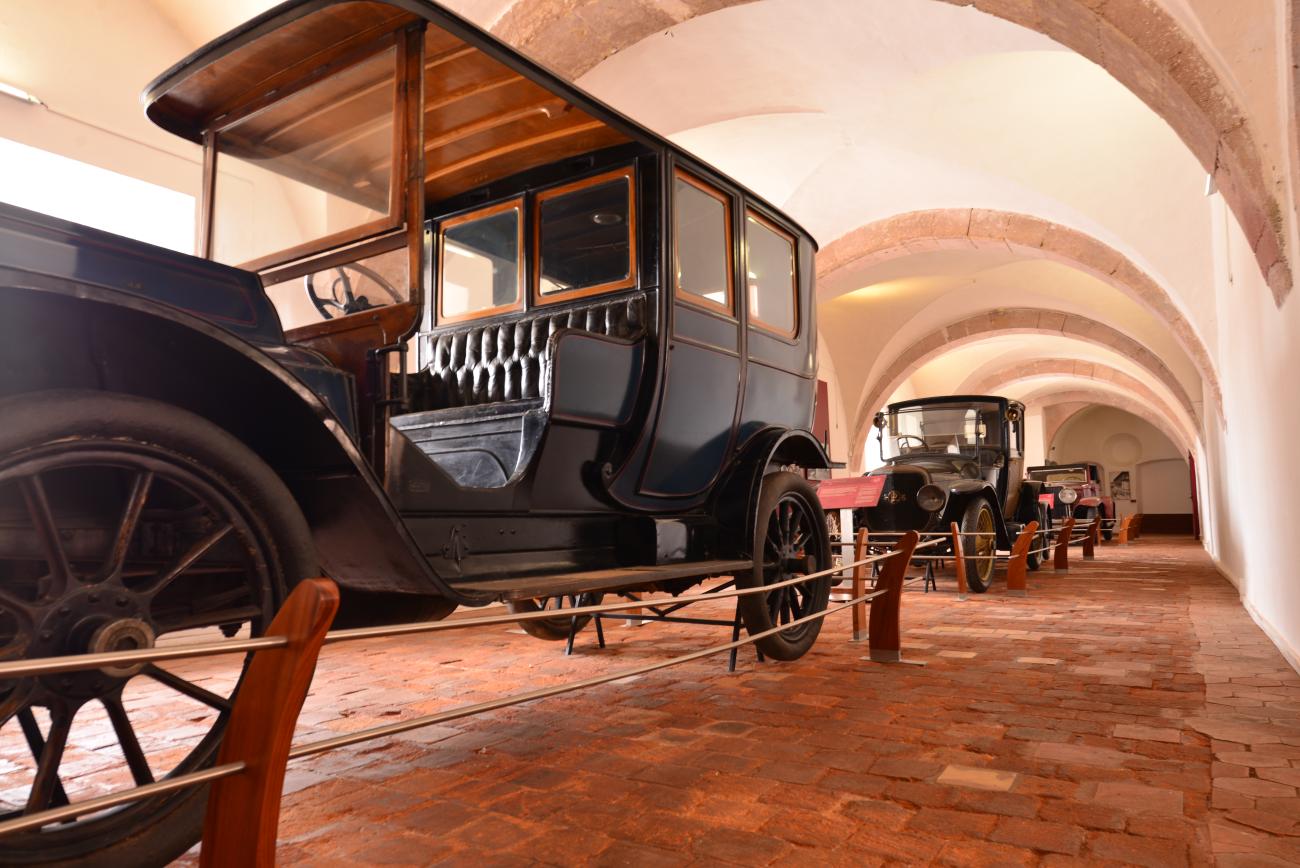
The exhibition room dedicated to the Camino Real de Tierra Adentro showcases eight modes of transportation from the 18th to the 20th centuries. Through these objects, visitors can observe how the discovery of silver mines in Zacatecas was a powerful motivator for the Spanish to venture into the northern regions of New Spain. The Camino Real de Tierra Adentro, which extended from Mexico City to Santa Fe, New Mexico in the United States, played a crucial role in this expansion. The College of Propaganda Fide was funded by influential miners such as Ignacio Rivera de Bernárdez and Francisco Xavier Aristorena y Lanz.
The Franciscans of the Apostolic College of Propaganda Fide of Guadalupe, Zacatecas, played a leading role in this effort. From there, numerous groups of friars set out to establish missions in northern Mexico and present-day southern United States along the Camino Real. During their long journeys, they conducted mass baptisms and preached the gospel to the local inhabitants. This work was not easy, and many times they faced failure and martyrdom; however, their determination led them to the farthest regions of the Viceroyalty, including Texas and New Mexico.

The Martyrs of Japan
In 1521, the slow process of colonization and Christianization began on the Philippine archipelago, named in honor of Spanish King Philip II when Spain conquered and colonized the Asian region. The Philippines maintained a close trade exchange with New Spain through the Manila Galleon, which sailed…
The Martyrs of Japan


In 1521, the slow process of colonization and Christianization began on the Philippine archipelago, named in honor of Spanish King Philip II when Spain conquered and colonized the Asian region. The Philippines maintained a close trade exchange with New Spain through the Manila Galleon, which sailed from the port of Acapulco to Manila.
Following this route, in 1596, the Spanish ship "San Felipe", traveling from Manila, Philippines to Acapulco, was shipwrecked off the coast of Japan. When the ship's captain, Francisco de Landa, was captured, he was brought before the emperor, Tagcosama, and declared that the Franciscan and Jesuit missionaries were advancing to facilitate the Spanish army's invasion. The ruler's reaction was so strong that he ordered his shogun, Toyotomi Hideyoshi (the general in charge of fighting the barbarians), to arrest three Jesuits, six Franciscans, and 17 Japanese Christians. These individuals were transferred through various towns during the winter, covering 800 kilometers, and were tortured by having one ear cut off as a symbol of humiliation, intended to show the population the punishment for Christian converts. Ultimately, they were bound to a cross and pierced with two crossed spears in Nagasaki in 1597. In 1862, the 26 prisoners were canonized as the "Martyrs of Japan."
Atrium
The Colegio de Guadalupe was built on the "Huertas de Melgar", land named after Jerónima de Castilla, the widow of Melgar, who donated it in 1674. On this site stood an old hermitage dedicated to Our Lady of Mount Carmel. Two years later, ecclesiastical permission was granted to construct a new…
Atrium
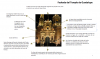
The Colegio de Guadalupe was built on the "Huertas de Melgar", land named after Jerónima de Castilla, the widow of Melgar, who donated it in 1674. On this site stood an old hermitage dedicated to Our Lady of Mount Carmel. Two years later, ecclesiastical permission was granted to construct a new sanctuary dedicated to the Virgin of Guadalupe, along with a guesthouse for friars traveling northward.
The initial construction work began in 1702 and included the lower level of the complex: the Cloister of Saint Francis, the church and its sacristy, the atrium, a cemetery for benefactors, and the novitiate. On January 12, 1707, these foundations gave rise to the Apostolic College of Propaganda Fide of Guadalupe, Zacatecas. The building efforts continued, and by 1797 the atrium’s 14 Stations of the Cross had been completed, each with a niche marked by a stone cross. These stations commemorate the path Christ followed to Calvary, where he was crucified.
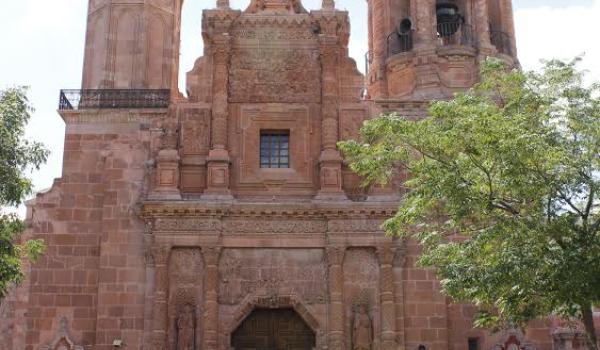
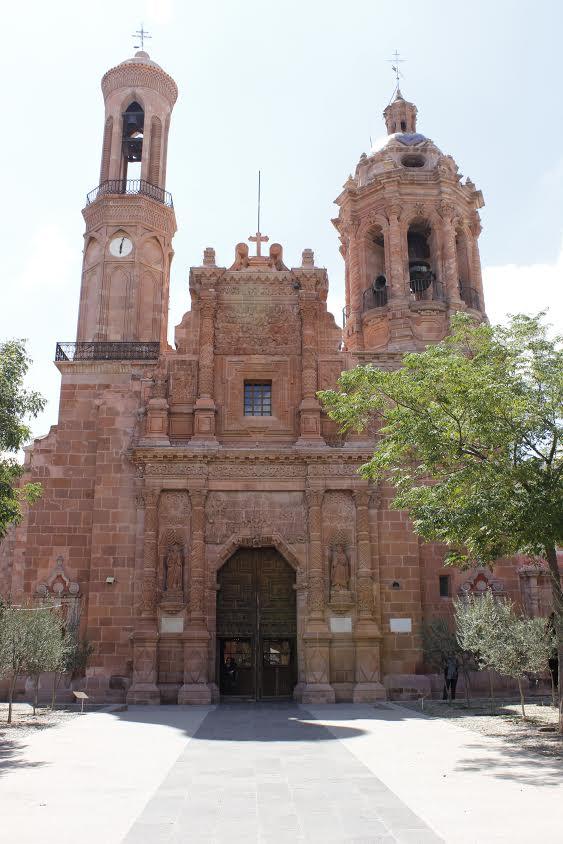
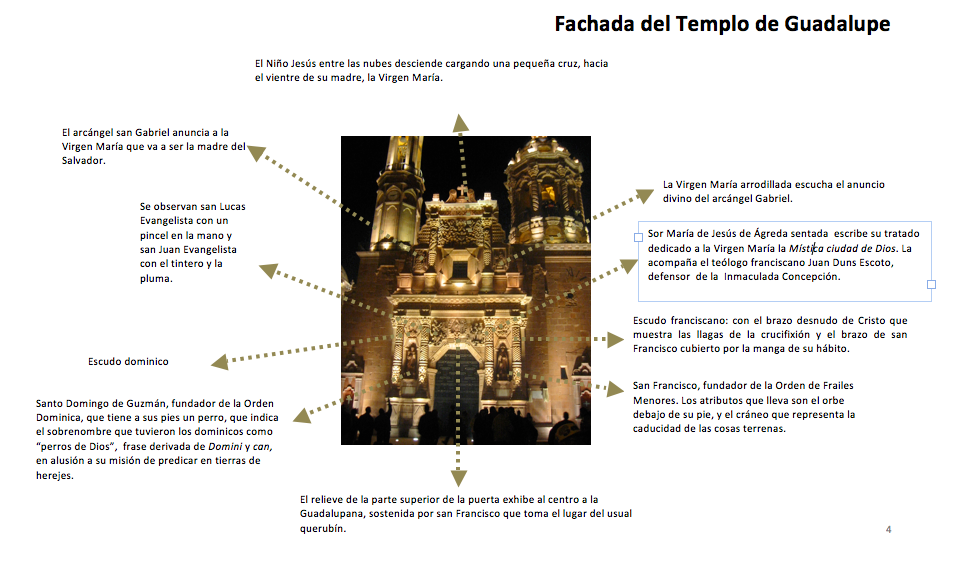
The church’s façade was constructed in the first half of the 18th century and reflects the economic prosperity enjoyed by some in the region at that time. The elaborate ornamentation and the use of twisted Solomonic columns are clear expressions of the Baroque style.
Auditorium
This space, once part of the conventual complex of the former Colegio de Propaganda Fide, now serves as a venue for a variety of events held throughout the year. It is a versatile, multi-purpose area where theatrical performances, concerts, lectures, seminars, and even temporary exhibitions take…
Auditorium
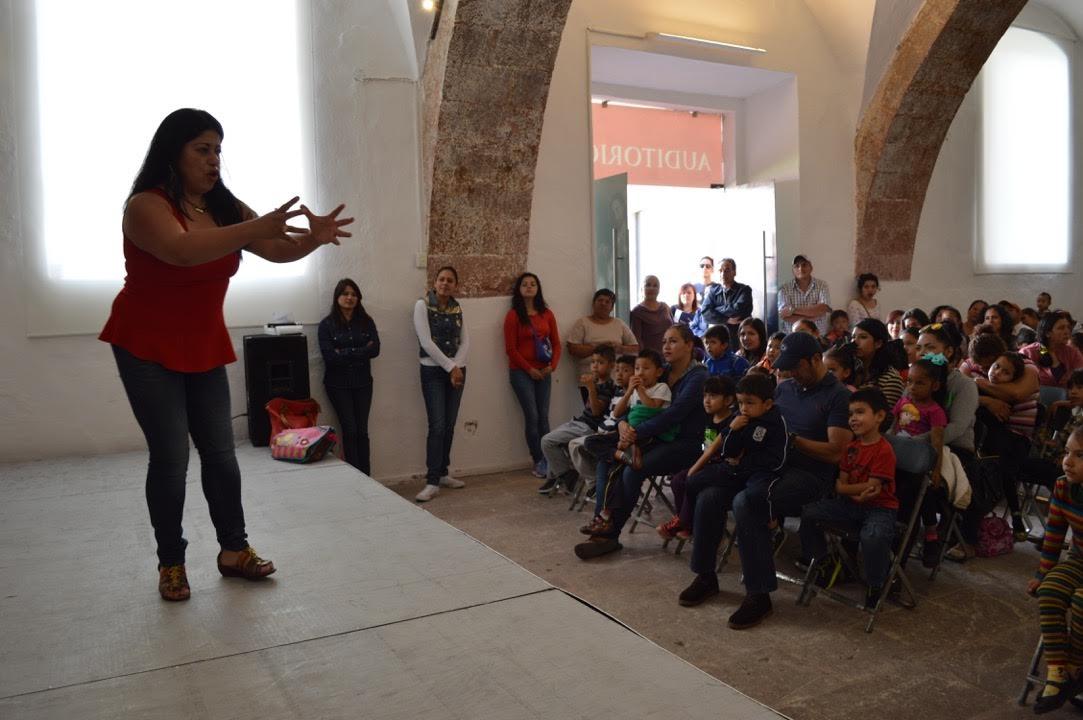
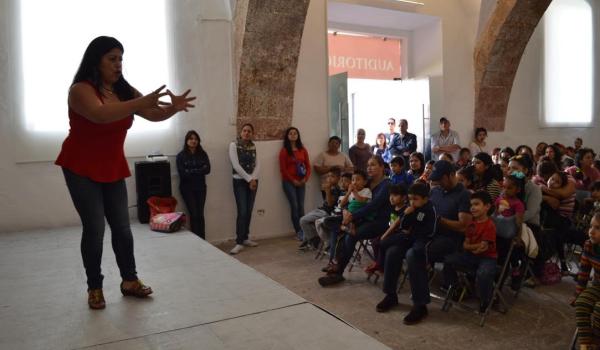
This space, once part of the conventual complex of the former Colegio de Propaganda Fide, now serves as a venue for a variety of events held throughout the year. It is a versatile, multi-purpose area where theatrical performances, concerts, lectures, seminars, and even temporary exhibitions take place.
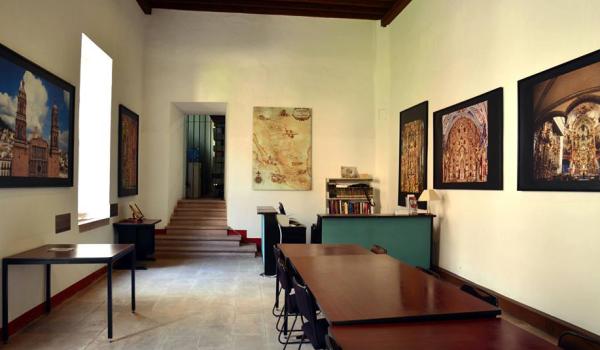
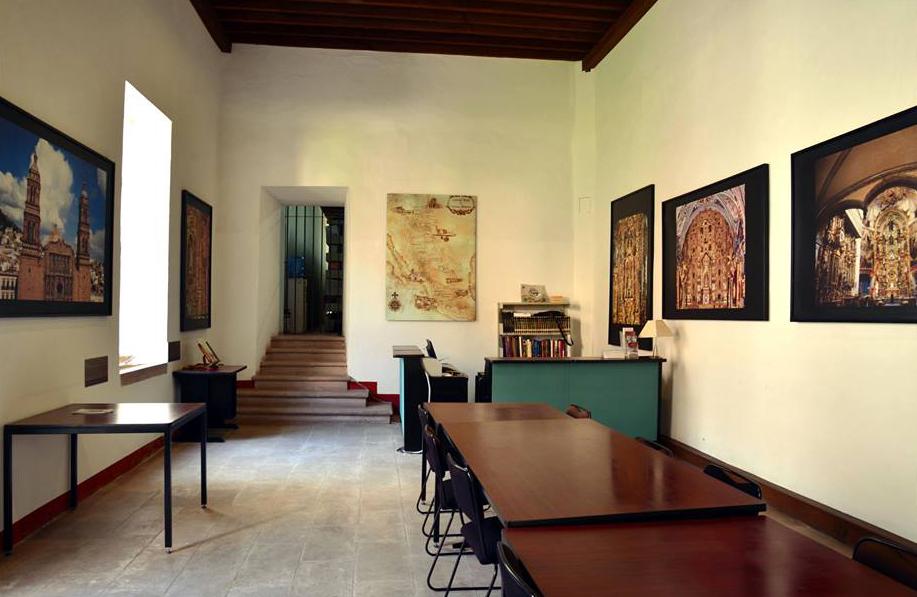
Library of the Camino Real de Tierra Adentro
The Library of the Camino Real de Tierra Adentro is open to the public Monday through Friday, from 9:00 a.m. to 5:00 p.m. It is an ideal place for in-depth research on this important historical route.
Infirmary Chapel
Following Franciscan convent tradition, the Colegio de Guadalupe had an infirmary for the use of friars and novices, which included 69 cells and a small oratory. Its construction took place between 1726 and 1783. Like many Franciscan oratories dedicated to healing, this chapel was consecrated to…
Infirmary Chapel

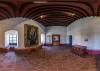
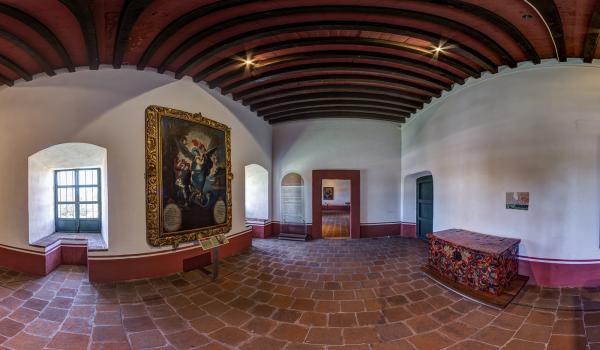
Following Franciscan convent tradition, the Colegio de Guadalupe had an infirmary for the use of friars and novices, which included 69 cells and a small oratory. Its construction took place between 1726 and 1783. Like many Franciscan oratories dedicated to healing, this chapel was consecrated to Saint Anthony of Padua, and features two arched paintings depicting scenes from his life.
On the pendentives, you can see artworks representing three of the four apparitions of the Virgin of Guadalupe, who was considered the protector of the Colegio. The chapel also houses paintings of scenes and devotions related to the Virgin Mary, as well as large antiphonaries with hymns dedicated to the Mother of Christ.
Special attention should be paid to the doorway, framed with sculpted flowering vines and adorned at the top center with a depiction of God the Father, along with monograms of the Virgin Mary and Jesus.
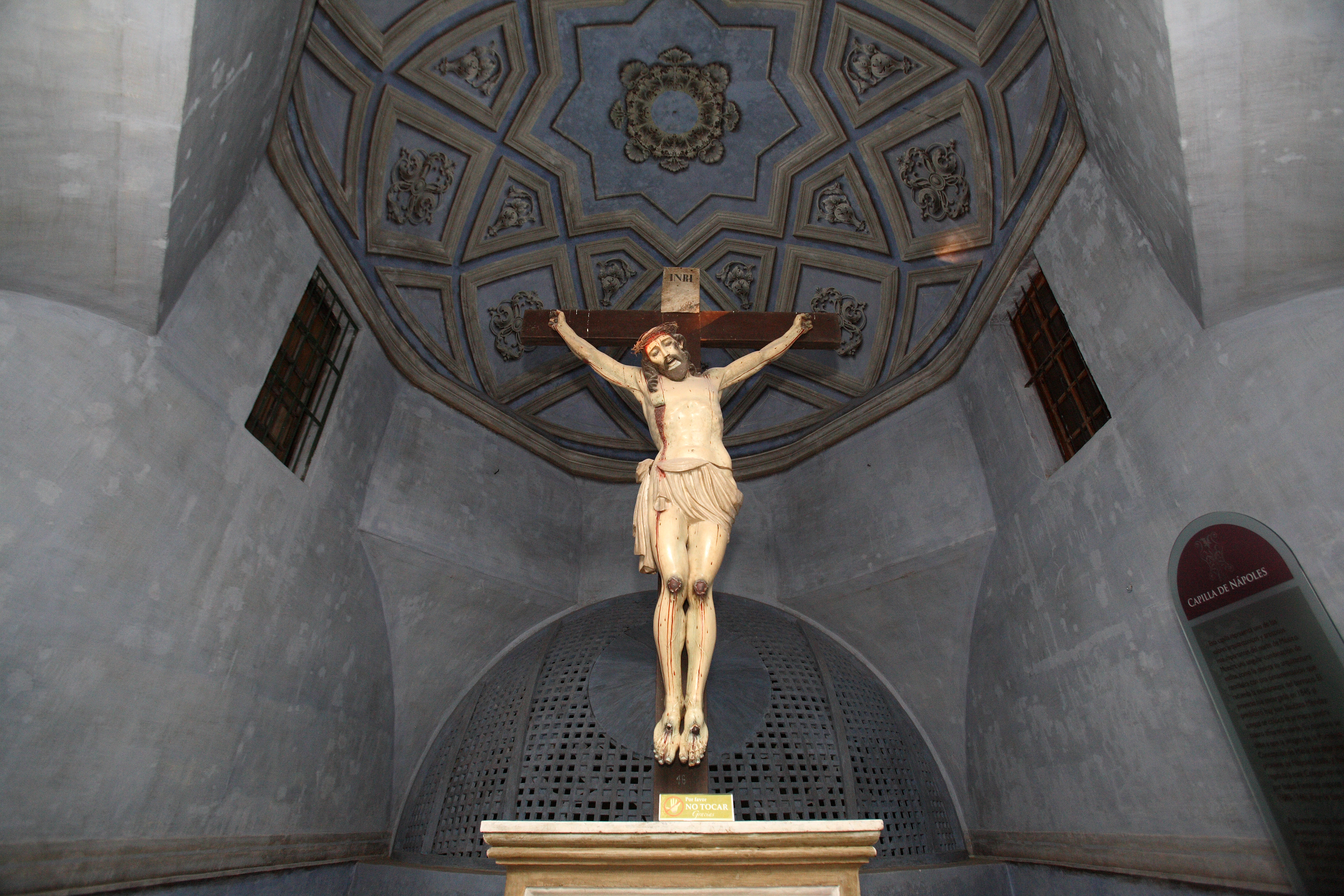
Naples Chapel
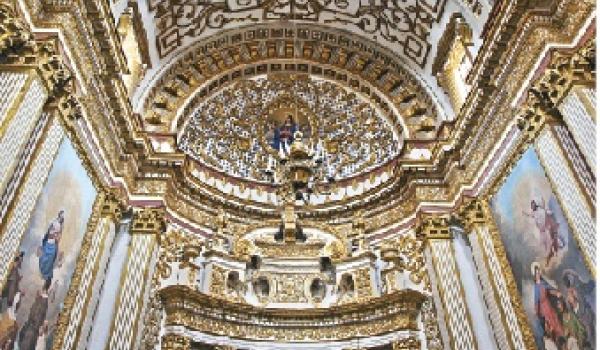
This chapel is one of the most important architectural and artistic treasures in northern Mexico. It features a unique blend of styles—its neoclassical structure is enriched with ornamentation that recalls the exuberance of the Baroque. The project was entrusted to Father Juan Bautista Méndez in…
Naples Chapel
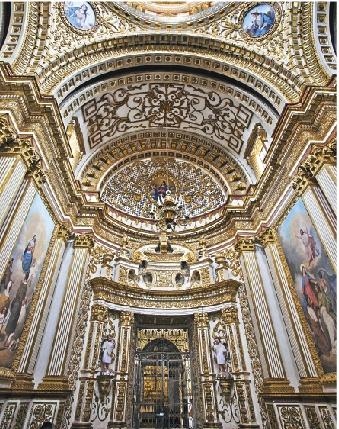
This chapel is one of the most important architectural and artistic treasures in northern Mexico. It features a unique blend of styles—its neoclassical structure is enriched with ornamentation that recalls the exuberance of the Baroque. The project was entrusted to Father Juan Bautista Méndez in 1845, although the cornerstone was laid four years later.
The chapel is named after the image of the Immaculate Conception of Mary that adorns the main altar, which came from Naples, Italy. This sculpture was gifted to the Colegio in the 18th century by Isabel Farnese, wife of King Philip V of Spain (1683–1746).
Upon entering, on the right side you’ll find an altar dedicated to the Sacred Heart of Mary, while the one on the left honors the Sacred Heart of Jesus. The eight oil paintings, completed in the last quarter of the 19th century, were created by Felipe Santiago Gutiérrez, an artist trained at the San Carlos Academy. These works, which reference the Litany of Loreto, replaced earlier paintings by Juan Nepomuceno Herrera.
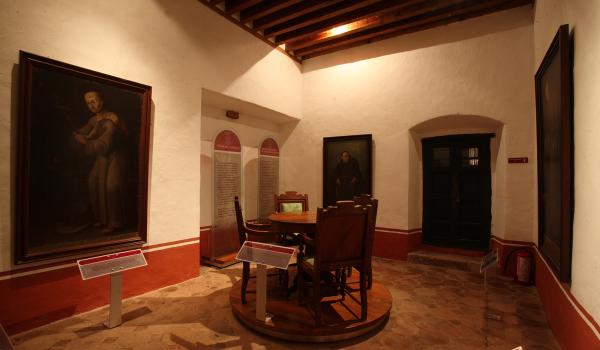
Guardian’s Cell
The highest authority within the convent was the guardian, who was supported in his duties by four senior friars known as “discretos,” forming a council called the "discretorio". Together, the guardian and his council oversaw the administration of the Colegio, which included supervising the…
Guardian’s Cell
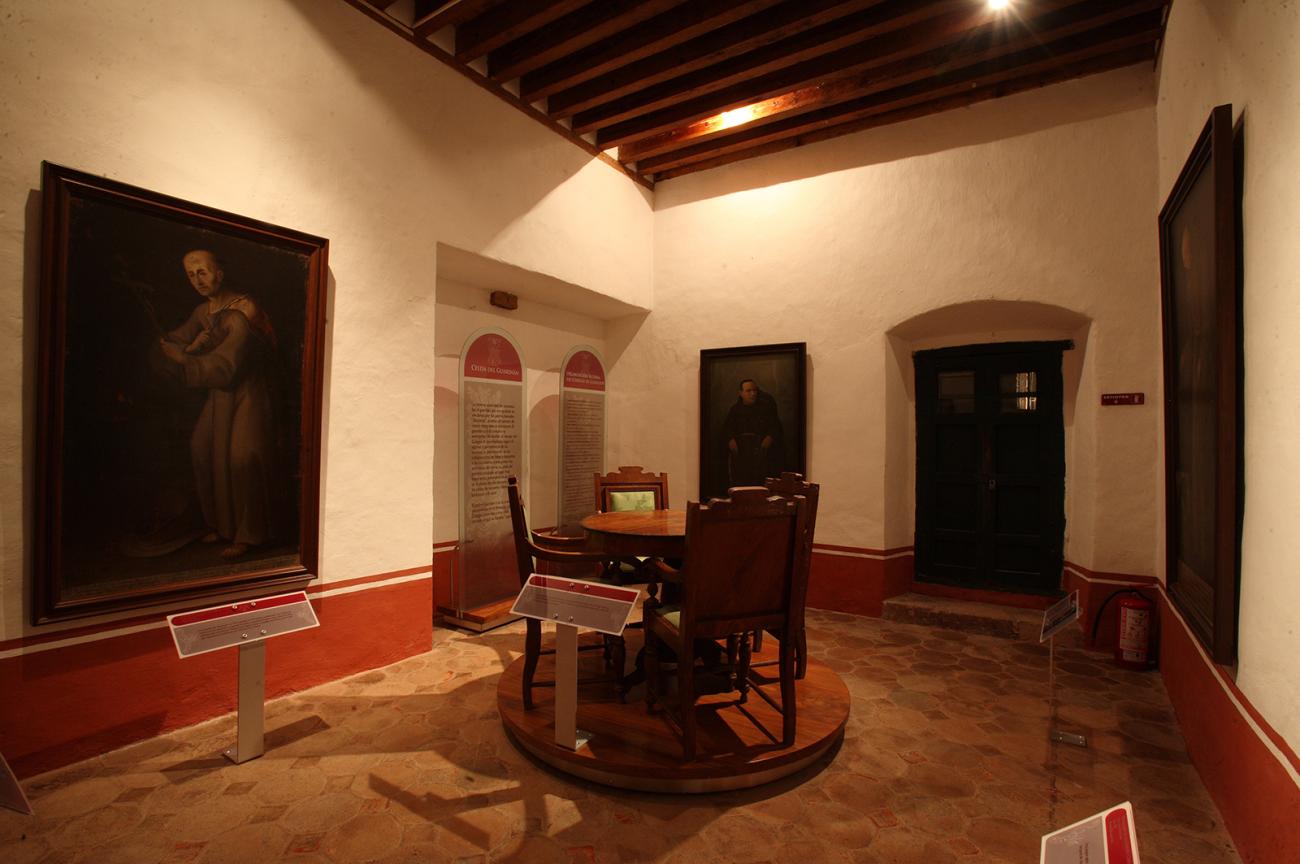
The highest authority within the convent was the guardian, who was supported in his duties by four senior friars known as “discretos,” forming a council called the "discretorio". Together, the guardian and his council oversaw the administration of the Colegio, which included supervising the admission and formation of novices, coordinating work among the faithful, and organizing missionary expeditions to evangelize the northern territories.
The guardian’s cell held a place of great importance. It was typically located on the upper floor of the cloister, near the cells of the other friars, the library, and the choir.
The guardian and his "discretorio" served as the governing body of the Colegio for a period of two to three years, a term referred to as a chapter.
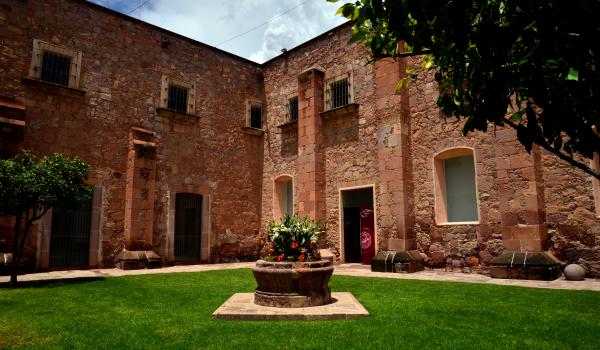
Courtyards
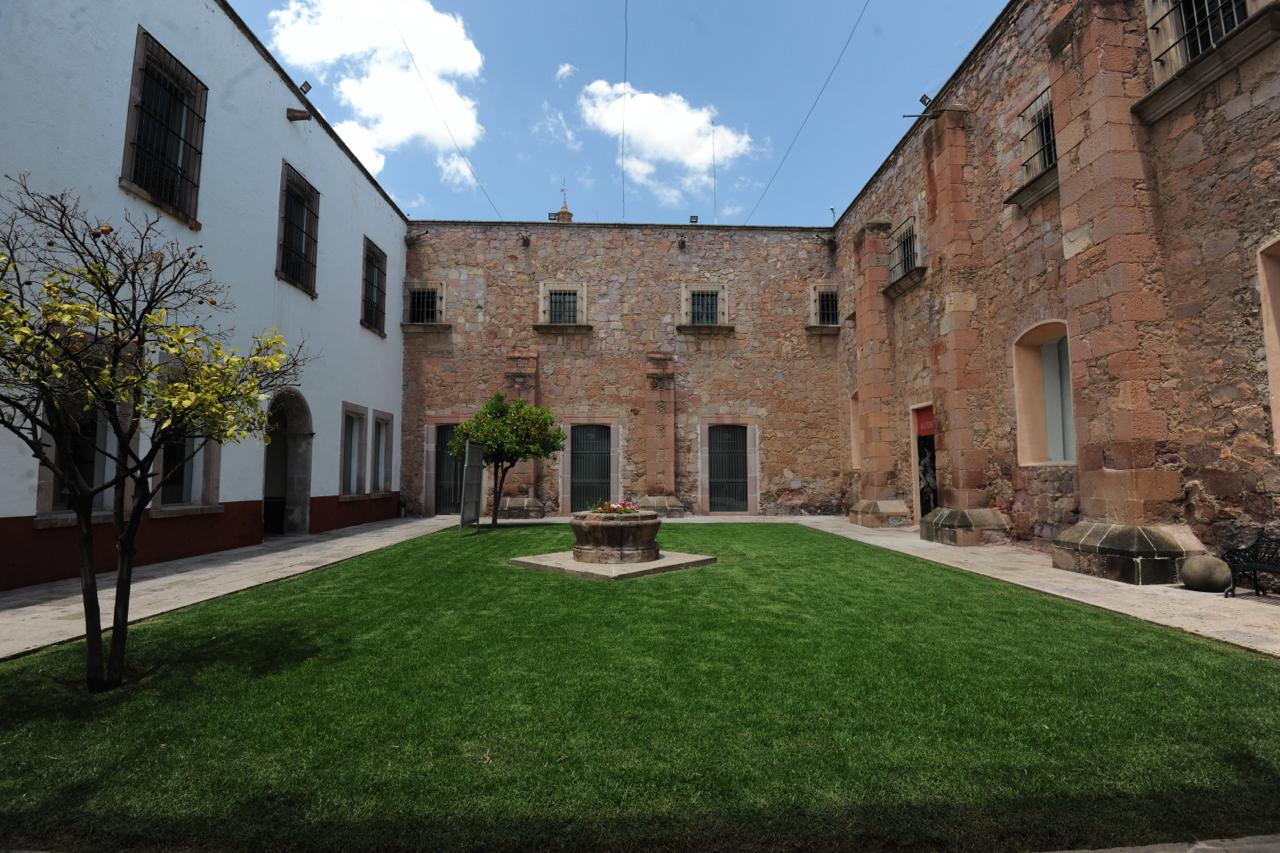
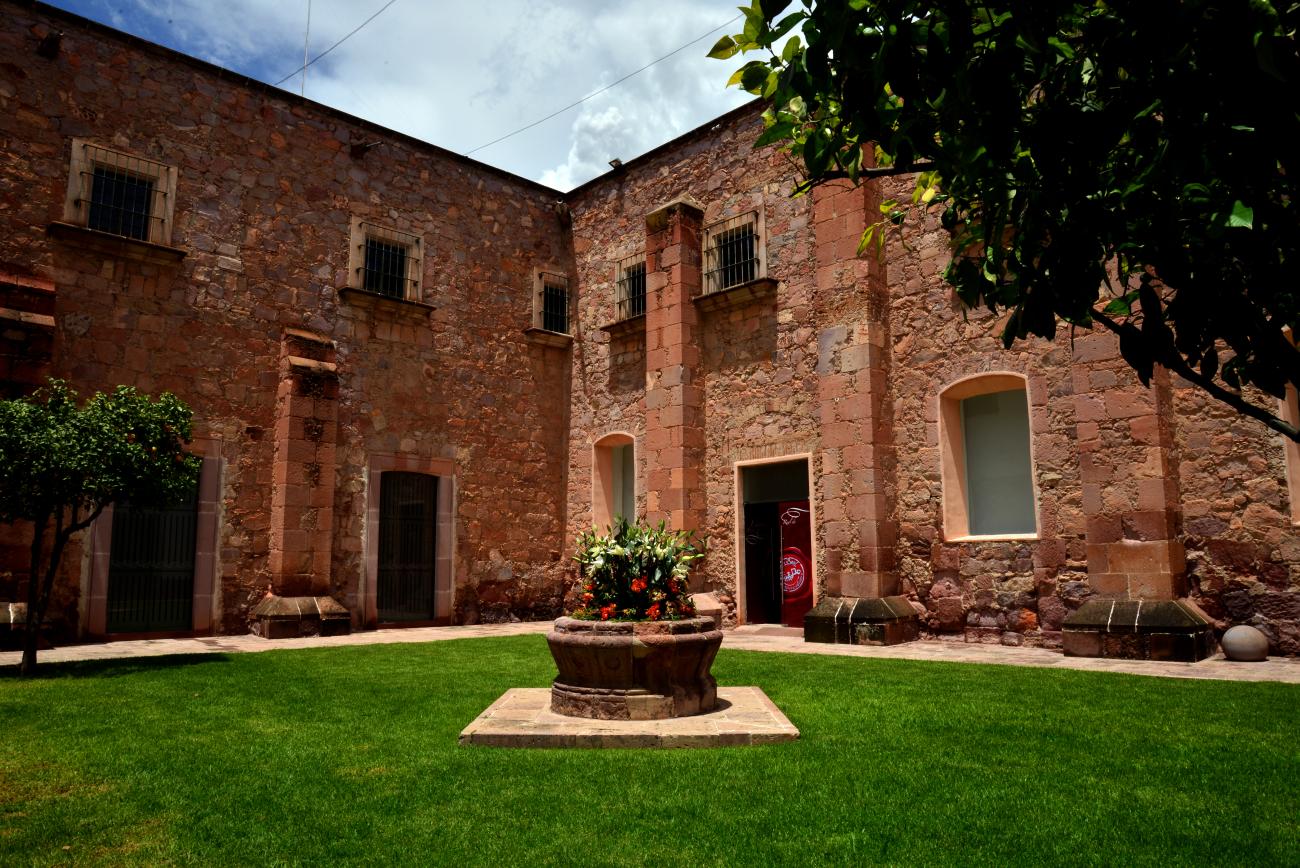
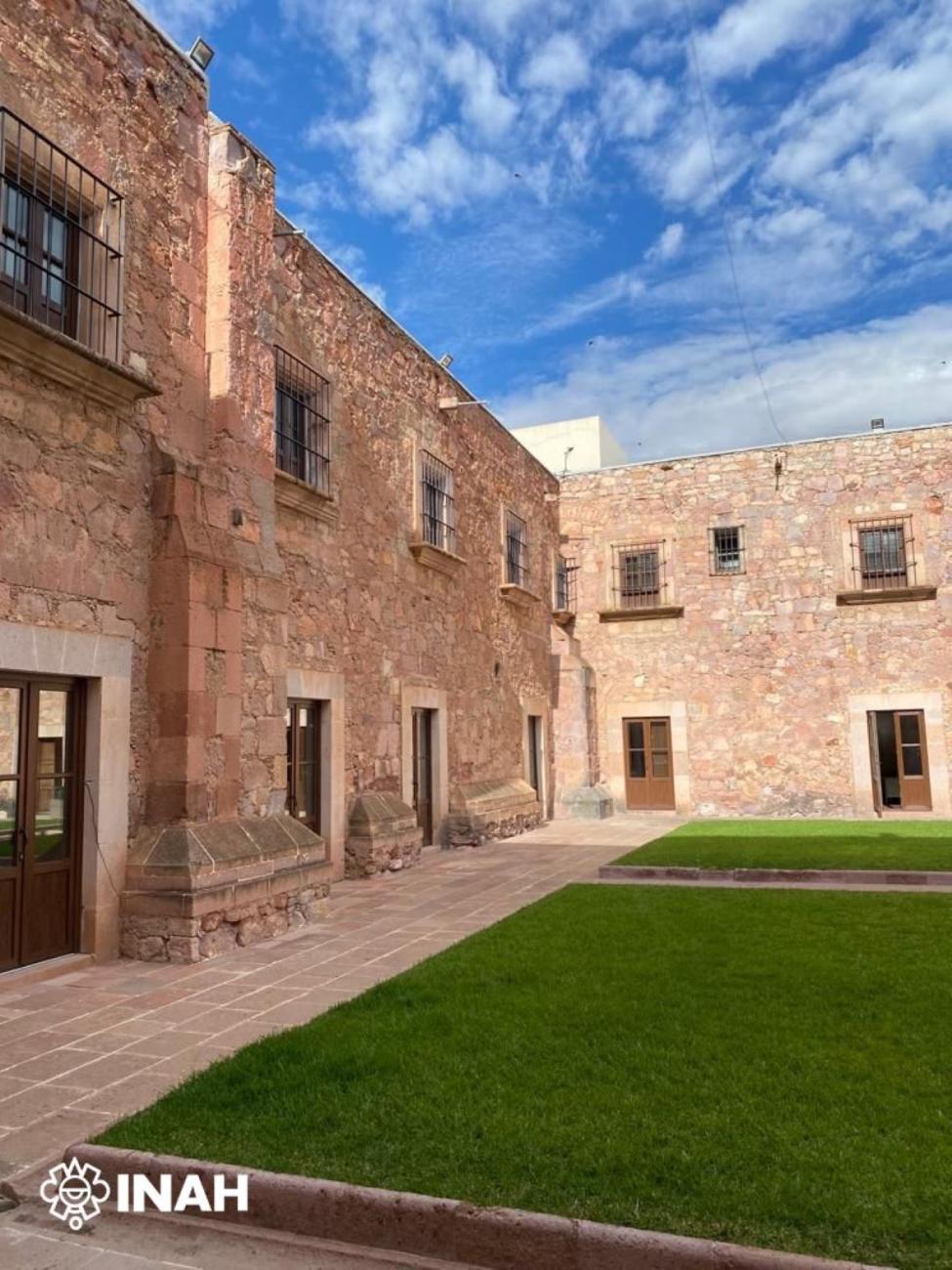
The Guadalupe Museum features three garden courtyards. In the third courtyard, visitors will find the cisterns that once supplied water to the infirmary of the former Colegio de Guadalupe.
Temple of Guadalupe
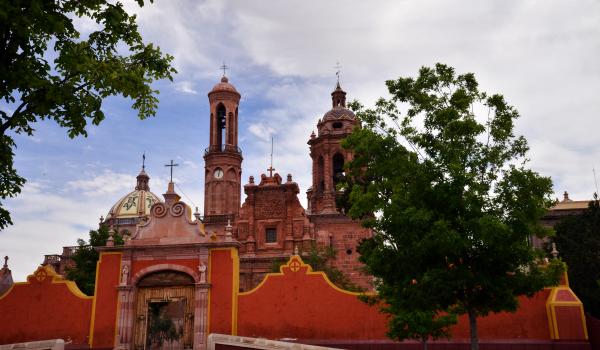
The Church of Guadalupe was built on the site of an earlier chapel dedicated to Our Lady of Mount Carmel. Later, a chapel was established in devotion to Our Lady of Guadalupe, and finally, in 1721, the Temple of Guadalupe was completed. The economic prosperity of Zacatecas, fueled by mining,…
Temple of Guadalupe
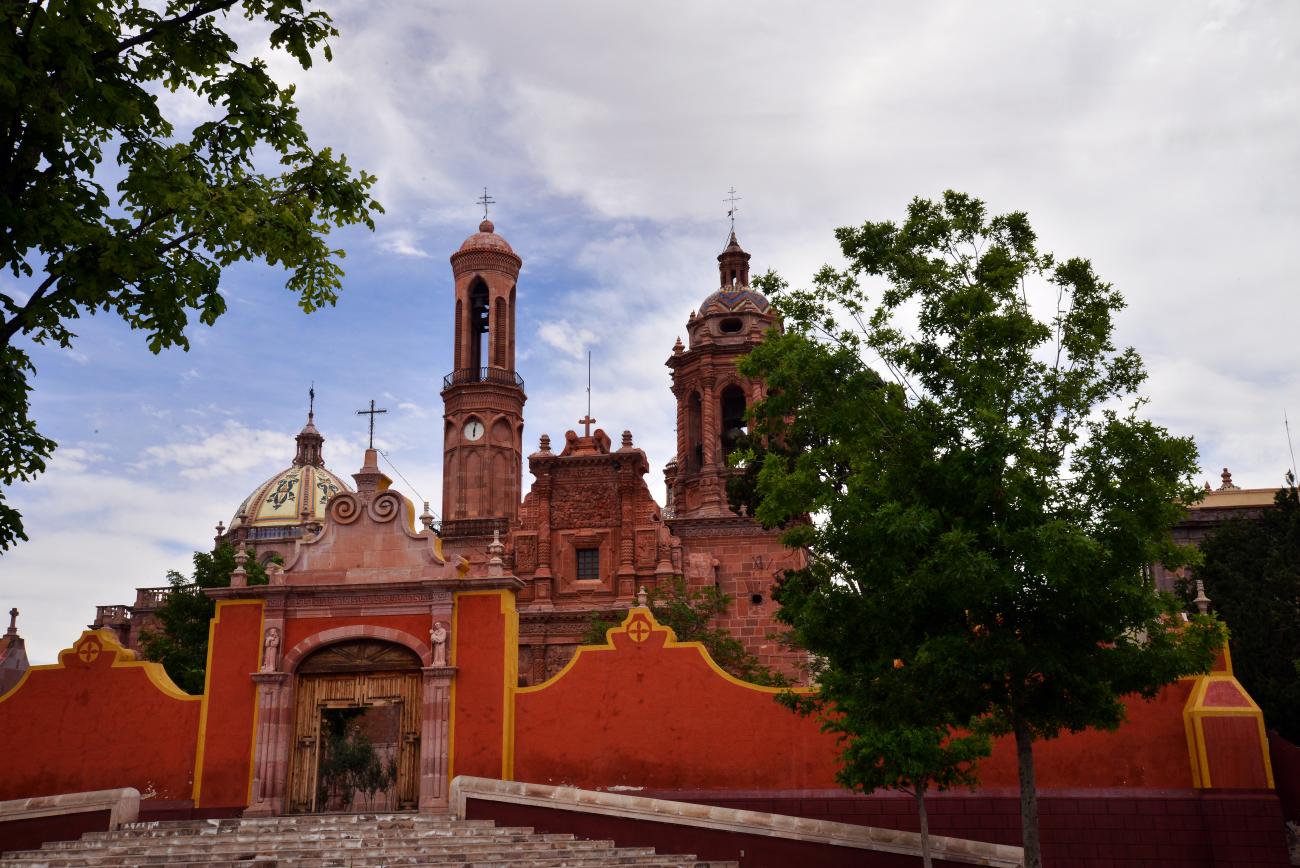
The Church of Guadalupe was built on the site of an earlier chapel dedicated to Our Lady of Mount Carmel. Later, a chapel was established in devotion to Our Lady of Guadalupe, and finally, in 1721, the Temple of Guadalupe was completed. The economic prosperity of Zacatecas, fueled by mining, greatly contributed to a flourishing of artistic activity.

The patronage of the Virgin of Guadalupe
Document
Document
- DirecciónVíctor Hugo Jasso Ortizvictorhugo_jasso@inah.gob.mx+52 (492) 923 20 89AdministraciónJosé Carlos Salas Moralesjosecarlos_salas@inah.gob.mx+52 (492) 923 20 89MuseografíaNataly Adriana Medrano Varelanataly_medrano@inah.gob.mx+52 (492) 923 20 89Protección y Resguardo de Bienes CulturalesGuadalupe Antonio de Dios Sánchezantonio_dedios@inah.gob.mx+52 (492) 923 20 89Gestión del Patrimonio CulturalEsthela Fonseca Rodríguezesthela_fonseca@inah.gob.mx+52 (492) 923 20 89